
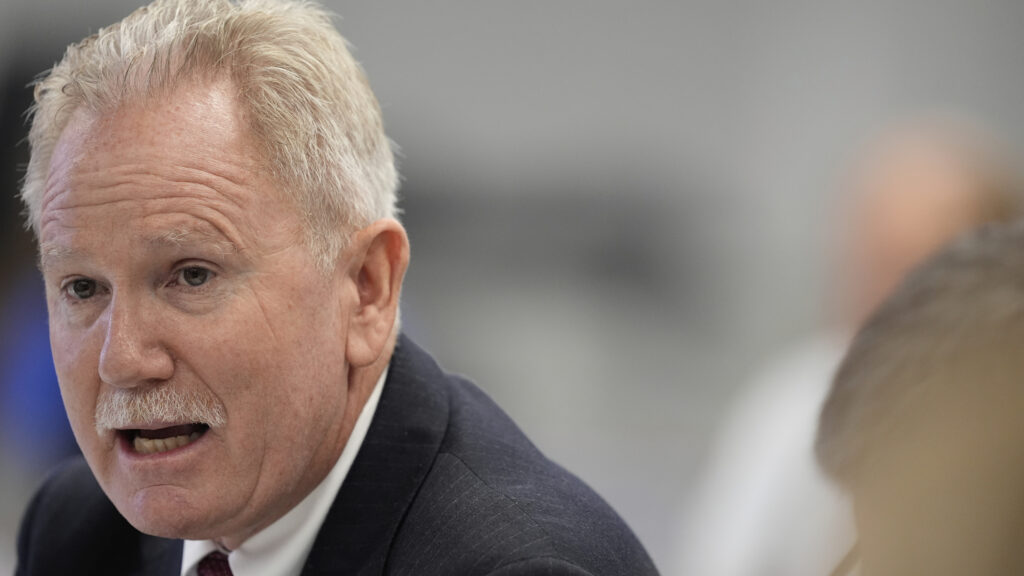
The chair of the Advisory Committee on Immunization Practices (ACIP), Kirk Milhoan, has sparked controversy by suggesting that the public should reconsider the necessity of polio vaccines and other longstanding immunization recommendations. In a podcast released on October 5, 2023, Milhoan emphasized the importance of individual freedoms in health policy, citing the impact of the Covid-19 pandemic on his views.
Milhoan, a pediatric cardiologist who took over as chair of ACIP in December 2022, expressed skepticism about established vaccine science during the podcast “Why Should I Trust You?” His remarks indicated a shift in the committee’s approach, particularly as it reviews vaccination guidelines for children and pregnant individuals. When questioned about recent revisions to vaccine policies, including the delay in administering hepatitis B vaccines to some children, Milhoan stated, “Yeah, because we were concerned about mandates, and mandates have really harmed and increased hesitancy.”
The current ACIP members were selected by Robert F. Kennedy Jr., the health secretary, who dismissed previous members last summer, alleging their ties to the pharmaceutical industry influenced their recommendations. This newly appointed group has already suggested removing thimerosal, a mercury-based preservative, from flu vaccines and has proposed separating the measles, mumps, rubella, and varicella vaccines.
Milhoan’s interview marked his first public comments since ACIP’s December meeting, where the revised hepatitis B recommendation was made. He previously likened committee members to “puppets on a string,” referring to the pressures faced by the panel. Despite these pressures, he asserted that he has not received directives from Kennedy or his agency regarding specific votes.
Public Health vs. Individual Rights
In the interview, Milhoan articulated a vision for the new ACIP that prioritizes individual autonomy over public health. He stated, “What we are doing is returning individual autonomy to the first order, not public health.” He criticized the practices of healthcare providers, claiming they often fail to adequately inform patients about the risks and benefits of vaccines.
Milhoan accused the American Academy of Pediatrics of not giving practitioners enough time to discuss vaccine risks with their patients, emphasizing that decision-making should be left to families. He remarked, “Patients should be making the decisions on what the risks are of disease, what the risks are of vaccines… and then make a decision from there.”
The influence of Covid-19 was a recurring theme in Milhoan’s remarks. He expressed concern that the messaging around Covid vaccines overstated their effectiveness. “People couldn’t go to school, and they couldn’t do this, and they couldn’t do this, to get a vaccine that has really been a large failure,” he said. He further cited claims from FDA officials regarding the deaths of at least ten children following vaccination, labeling it “a very large death signal,” although he did not provide details on the data he claimed to have seen.
Milhoan’s statements raise questions about the scientific basis of current public health policies. He expressed a critical stance towards established science, asserting, “I don’t like established science,” and challenging the assertion that vaccines significantly reduce the spread of polio and measles viruses. “Science is what I observe,” he stated, pushing back against the notion that vaccines have been conclusively proven to be effective.
Questioning the Necessity of Vaccines
When discussing the necessity of polio and measles vaccines, Milhoan suggested that contemporary conditions warrant a reevaluation of vaccination strategies. He noted that while there has been a concerted international effort to eradicate polio, the virus still circulates in areas like Pakistan and Afghanistan. He remarked, “Our sanitation is different, our risk of disease is different, and so those all play into the evaluation of whether this is worthwhile of taking a risk for a vaccine or not.”
He also pointed out that measles is currently spreading at unprecedented rates in parts of the United States. “What we’re going to have is a real-world experience of when unvaccinated people get measles,” Milhoan said, suggesting that ongoing outbreaks might yield new insights into hospitalization and mortality rates associated with the disease.
Despite his stance, Milhoan clarified that he does not advocate for declining vaccination rates. He expressed a desire for vaccines that minimize side effects while maximizing efficacy. In early October 2023, the Department of Health and Human Services recommended a new childhood vaccine schedule that significantly reduced the number of recommended vaccines. Although Milhoan stated that ACIP was not consulted on this change, he did not express offense. “I don’t have a desire for less people to get vaccinated,” he reiterated.
Milhoan’s controversial comments signal a potential shift in health policy that could have widespread implications for vaccination practices. As the committee continues to review established guidelines, the balance between individual rights and public health remains a critical and contentious issue.