
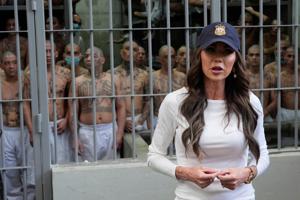
CBS News has withdrawn a segment from its iconic program “60 Minutes” that focused on deportations under the Trump administration. The decision has sparked a public dispute within the organization, as correspondent Sharyn Alfonsi accused the network of political motivations behind the cancellation. The segment, which included interviews with deportees from El Salvador’s notorious CECOT prison, was pulled just two hours before it was scheduled to air on October 29, 2023.
Bari Weiss, the newly appointed editor-in-chief of CBS News, stated that the story did not “advance the ball” and needed additional context from the Trump administration. In a memo to her colleagues, Alfonsi defended the integrity of the report, asserting it had been fact-checked and approved by CBS’s legal and standards teams. She expressed concern that the administration’s refusal to comment should not invalidate the story’s relevance, stating, “Government silence is a statement, not a VETO.” Alfonsi’s email raised alarms about the implications of allowing the government to dictate the parameters of news coverage.
Weiss, who became the CBS News editor-in-chief in October 2023, has faced scrutiny regarding her leadership style and potential bias. Critics speculate that her appointment signals a shift toward a more accommodating approach to the Trump administration, a view fueled by the network’s history of clashes with the former president. Trump’s administration has previously criticized “60 Minutes” for its tough questioning and editorial choices.
In response to the internal conflict, Weiss acknowledged Alfonsi’s findings but emphasized that similar stories had been reported by outlets such as The New York Times. She insisted that “60 Minutes” must provide more original content and secure interviews with key figures to maintain its credibility.
“I look forward to airing Alfonsi’s piece when it’s ready,” Weiss stated, indicating her desire for a more comprehensive approach to the reporting. During an internal editorial meeting, she expressed frustration with Alfonsi’s memo, emphasizing the importance of respectful discourse within the newsroom.
The conflict also highlights a broader concern regarding editorial independence in the face of political pressures. Alfonsi underscored the potential dangers of allowing a lack of government participation to derail important journalistic inquiries. “If the administration’s refusal to participate becomes a valid reason to spike a story, we have effectively handed them a ‘kill switch’ for any reporting they find inconvenient,” she warned.
Amid this turmoil, the future of “60 Minutes” appears uncertain. Recent statements from correspondent Scott Pelley, who has received accolades for his work, suggest that there is ongoing concern about the impact of corporate ownership on journalistic integrity. In a recent award acceptance speech, Pelley mentioned that stories produced during the Trump administration were aired with minimal interference from corporate executives, a claim that seems increasingly relevant as CBS navigates internal disputes.
As public interest in the Trump administration’s policies remains high, the implications of CBS’s editorial decisions will likely resonate beyond the newsroom, influencing how important stories are covered in the future. The decision to cancel the deportation story raises questions about the balance between editorial integrity and political considerations in journalism, a topic that continues to provoke debate in newsrooms nationwide.