
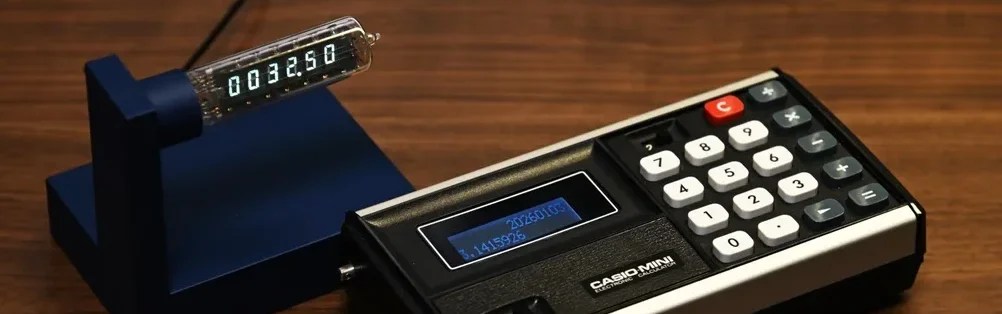
A creative project has emerged from a malfunctioning Casio Mini CM-602 calculator, demonstrating a remarkable blend of innovation and resourcefulness. An electronics enthusiast identified as shiura has successfully repurposed the broken device into a modern calculator featuring Reverse Polish Notation (RPN) and transformed the Variable Frequency Drive (VFD) into a stylish WiFi clock. The project not only salvages the original components but also showcases impressive engineering skills.
The project began when shiura encountered a common issue with the Casio Mini CM-602, which had suffered from what is often referred to as letting out the “magic smoke.” Instead of discarding the device, shiura decided to rebuild it using contemporary technology. The first step involved reverse engineering the VFD to create a functional clock. A detailed write-up accompanying the project offers a guide for anyone interested in replicating the process, even if they do not possess the same model of calculator or VFD.
To identify the necessary connections, shiura powered up the VFD and systematically interrupted power to various pins. This technique allowed for the mapping of segments and characters, effectively locating the anodes and grid electrodes. With the cathodes already identified by examining the printed circuit board (PCB), the next phase involved connecting the VFD to an ESP32 microcontroller through a transistor array, ensuring proper voltage levels. The result was a fully operational clock, with the design files and code made available on GitHub.
Innovative Calculator Hack
The calculator component of shiura‘s project adds another layer of sophistication. Utilizing the fact that the original Casio CPU shares a similar pin pitch with modern microcontrollers—specifically, 2.54 mm or 0.1 inches—shiura was able to install an RP2040 microcontroller in place of the original CPU. This setup allows the new calculator to scan the keypads using its General Purpose Input/Output (GPIO) pins. Additionally, a separate I2C display was wired to replace the original VFD, enhancing the calculator’s usability with two lines of output instead of one.
While it is unclear whether the original display was salvaged due to malfunctioning driver circuitry, the transformation has undoubtedly improved the device’s functionality. The code for the calculator is also accessible on GitHub. Although the documentation is primarily in Japanese, machine translation tools have made it easier for non-Japanese speakers to navigate the material. The code itself is user-friendly, reflecting shiura‘s expertise and consideration for a broader audience.
Continuing a Legacy of Innovation
This dual project exemplifies the spirit of innovation that shiura has consistently demonstrated in previous endeavors. Known for crafting exquisite clocks and repairing vintage pocket computers, shiura‘s latest venture combines both skills into one cohesive project. Longtime followers of shiura are likely familiar with the high standards of craftsmanship and creativity that characterize their work.
The successful transformation of a broken calculator into a functional RPN device and a striking VFD clock not only highlights the potential of upcycling electronics but also encourages others to explore similar projects. As technology continues to evolve, shiura‘s work serves as an inspiring reminder that challenges can indeed lead to innovative solutions.