
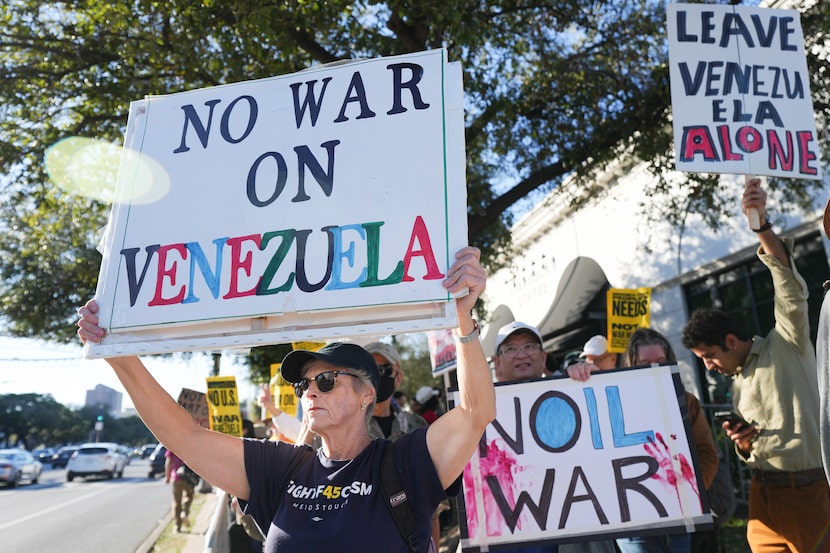
Criticism is mounting against former President Donald Trump and key members of his administration, including Secretary of the Department of Veterans Affairs Pete Hegseth and Senator Marco Rubio, over their alleged involvement in the kidnapping of Venezuelan President Nicolás Maduro. These actions, described as violations of the War Powers Act, have sparked outrage among various commentators who argue that such unilateral decisions undermine the rule of law and democratic processes.
The accusations stem from a series of actions during Trump’s presidency, which some believe reflect a dangerous precedent for American foreign policy. Critics assert that allowing the president to conduct military operations without congressional approval can lead to unnecessary loss of life, drawing parallels to past incidents like the Bay of Pigs invasion, which resulted in significant American casualties. As the U.S. Congress prepares for a critical vote in the coming week, many are urging lawmakers to take a stand against what they see as an imperial overreach by the executive branch.
In a letter to the editor, Finnegan Motz from Dallas contends that Trump’s actions are reminiscent of a rogue state rather than a leader of a democratic nation. He emphasizes that respect for legal frameworks is essential to distinguish between legitimate governance and authoritarian rule. Similarly, Barton Clemmer from North Grand Prairie questions the hypocrisy of the administration, citing Trump’s pardon of former Honduran President Juan Orlando Hernández, who was convicted of drug smuggling, while pursuing Maduro under similar allegations.
Many letters reflect a broader critique of U.S. interventionism. For instance, Kenneth K. Ebmeier from Round Rock highlights that the U.S. has long placed a bounty on Maduro, which raises questions about the consistency and motivations behind American foreign policy. His assertion that the U.S. intends to “run the nation” until a democratically elected leader is restored underscores the tension between intervention and self-determination.
The anniversary of the events of January 6, 2021, also looms large in the public consciousness. Richard Street from Carrollton reflects on the significance of that day, calling for a moment of remembrance and reflection. He urges Americans to remain vigilant in their commitment to democratic values, suggesting that the memory of that day should serve as a reminder of the fragility of democracy.
In addition, Dennis Roberson from Fort Worth expresses frustration over the perceived hypocrisy of the current administration, which he claims has displayed outrage over Maduro’s arrest despite previously offering a substantial reward for information leading to his capture. This sentiment is echoed by others who feel that there is a double standard in how different political narratives are handled regarding foreign leaders.
Meanwhile, some letters take a more personal turn, with Rudy Maranca recounting his journey from the Philippines to Texas as he sought freedom from oppression. His story highlights the contrasting experiences individuals face under various regimes and the allure of opportunity that America represents to many.
The discourse surrounding the U.S. intervention in Venezuela and the implications of such actions continues to evoke strong sentiments. As the political landscape evolves, the call for accountability remains a pressing issue for many citizens who are concerned about the trajectory of American foreign policy and its impact on democracy both domestically and abroad.