
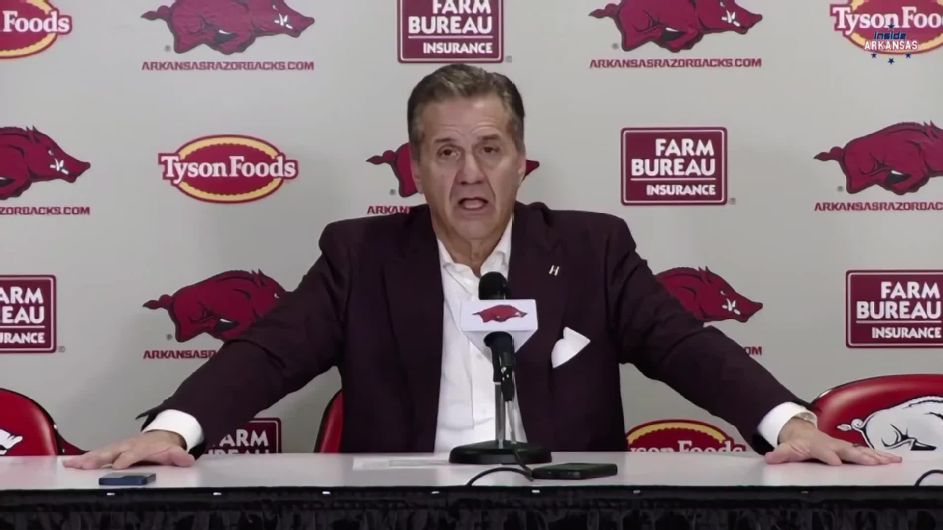
UPDATE: In a passionate postgame address, Kentucky Wildcats coach John Calipari has raised urgent alarms about the future of college basketball, stating, “There are no rules” to protect the value of American high school players. This declaration follows recent events where Baylor signed former NBA draft pick James Nnaji, intensifying concerns about the influx of players with professional experience.
During his six-minute rant after Arkansas’ decisive 103-74 victory over James Madison on Monday night, Calipari criticized the NCAA’s lack of regulations that allow teams to recruit seasoned players from professional leagues, both domestic and international. “Does anybody care what this is doing for 17- and 18-year-old American kids?” he questioned, highlighting the detrimental impact on young talents and their families.
Calipari’s comments come as more teams, including Louisville and Santa Clara, have recently signed players with G League experience. Nnaji, a towering 7-foot center who played professionally overseas, is the first drafted player cleared to play by the NCAA, raising significant concerns among coaches like Tom Izzo and Mark Few, who echoed Calipari’s sentiments on the flawed system.
“Now we’re taking guys that were drafted in the NBA. If that’s what we’re gonna do, shame on the NCAA,” said Izzo, reflecting widespread discontent among coaches.
Calipari has proposed a series of reforms to stabilize college basketball, advocating for a system where athletes have four years of eligibility within a five-year window and calling for the prohibition of midseason player additions. He stated, “This is an easy one. We can do this, NCAA,” urging swift action to rectify the current situation.
Moreover, Calipari emphasized strict rules regarding players entering the NBA draft. “If your name is in that draft and you got drafted, you can’t play,” he asserted, signaling a need for consistency and fairness in college sports.
In response to the growing controversy, NCAA president Charlie Baker issued a statement, asserting that the organization will not grant eligibility to any athlete who has signed an NBA contract. He vowed to work closely with Division I leaders to protect the integrity of college basketball following “recent outlier decisions” regarding eligibility.
As the NCAA reviews its policies, the future of college basketball remains uncertain. Stakeholders in the sport are urged to take immediate action to safeguard the opportunities available for young athletes. “How about we just do that stuff?” Calipari urged, emphasizing the need for proactive measures without waiting for congressional intervention.
With the landscape of college basketball shifting rapidly, all eyes are on the NCAA as it navigates these pivotal changes. Coaches and players alike await further developments that could reshape the fabric of the sport.