
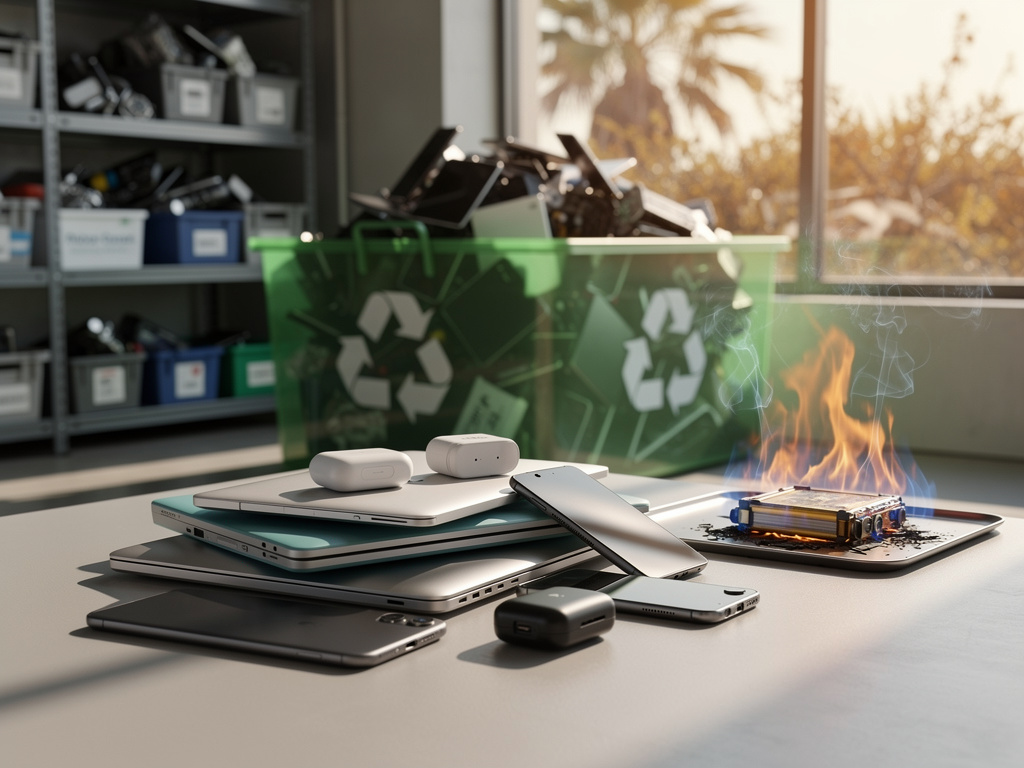
UPDATE: Starting January 1, 2026, California consumers are facing a new 1.5% fee on products containing non-removable batteries, a move aimed at enhancing recycling efforts and reducing dangerous battery fires. This fee, capped at $15 per item, will impact everything from high-end gaming consoles like PlayStation to everyday gadgets and tools.
The fee is part of a broader initiative to address the rising incidents of lithium-ion battery fires in recycling facilities. Recent reports confirm that improperly disposed batteries have caused numerous explosions, endangering workers and igniting toxic fumes. The California Department of Toxic Substances Control has linked these incidents to hidden batteries in consumer products.
This measure expands California’s existing electronic waste recycling program, which has been operational since 2003. The new fee is expected to generate millions annually for specialized recycling efforts, targeting a growing volume of lithium-ion waste. Environmental advocates, including Earthjustice, support this initiative as a step towards sustainable waste management.
Officials stress that the fee will encourage manufacturers to create products with easier-to-recycle batteries and participate in take-back programs. However, critics argue that the cost will ultimately be passed to consumers without ensuring significant improvements in recycling infrastructure.
The legislation enabling this fee was signed into law by Governor Gavin Newsom. Retailers will collect the fee at checkout, which will then be sent to the state for allocation to certified recyclers. For instance, a $500 PlayStation will incur a $7.50 charge, while a $20 power tool will add 30 cents.
As the fee rolls out, retailers are adjusting their point-of-sale systems, leading to initial confusion among consumers. Some small businesses report difficulties distinguishing between removable and non-removable batteries, raising concerns about compliance and potential over- or under-collection.
These developments come amid a backdrop of escalating battery-related fires that have plagued recycling centers in California. In response, environmental scientists emphasize the urgent need for effective recycling technologies to mitigate ecological harm from battery waste.
California’s leadership in electric vehicle adoption and renewable energy initiatives makes this fee particularly timely, as the state anticipates a surge in lithium-ion batteries entering the waste stream. This new policy aims to close the loop on a circular economy, promoting reuse and recycling rather than disposal.
Industry reactions to the fee have been mixed. Companies like Sony are under pressure to innovate in battery design, while power tool manufacturers are exploring modular designs to avoid the fee. The greeting card industry, particularly companies like Hallmark, are unexpectedly impacted, as their products containing embedded batteries now carry this surcharge.
Economic analysts suggest that while the fee may not drastically alter consumer pricing, it could influence buying habits, possibly delaying purchases or pushing consumers to seek alternatives. Retailers are concerned about the administrative burden of implementing the fee, which could result in higher prices for consumers.
Looking ahead, California’s fee could evolve to include more products or adjust rates based on recycling success metrics. Other states are closely observing California’s approach, as its policies may set a precedent for national standards regarding battery recycling.
NEXT STEPS: As this fee takes effect, consumer awareness and education will be crucial. Advocacy groups are pushing for better labeling on products to inform consumers about the environmental rationale behind the fee. Additionally, potential legal challenges from industry associations could impact the future scope of the program.
In conclusion, California’s new battery fee represents a significant shift in how the state addresses electronic waste and battery safety, with the potential to influence national policies and promote sustainable practices in consumer electronics.