
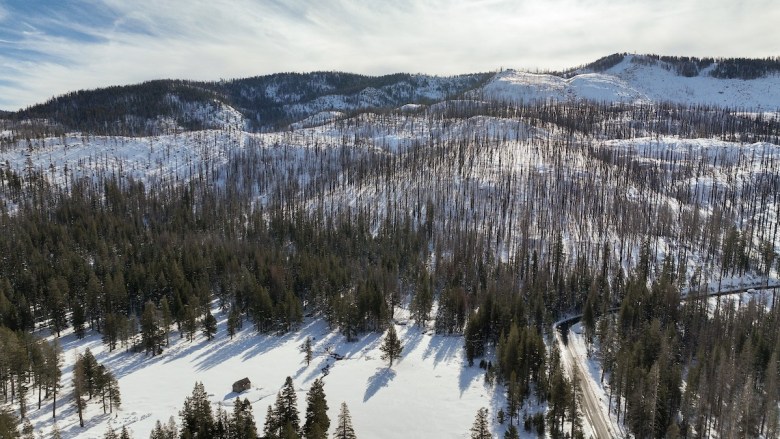
California’s annual snowpack, a crucial source of water for the state, has increased to 71% of normal following a series of storms in December 2023. The latest measurement was announced by the California Department of Water Resources on December 26, 2023, based on data collected from 130 automated stations across the Sierra Nevada.
The snowpack is often referred to as California’s “frozen reservoir,” and its health is vital for the state’s water supply. Angelique Fabbiani-Leon, the state hydrometerologist, noted that the dry conditions and warmer temperatures earlier in the month had initially delayed the snow-building season. However, the recent storm activity, particularly in the last week, has significantly contributed to establishing a solid base for this year’s snowpack.
As of now, the snowpack measurement equates to 6.5 inches of water across the mountainous regions. This figure is notably lower than the 115% of normal recorded on the same date last year. Despite the current reading falling below normal, California’s major reservoirs are performing well, standing at 123% of average capacity. This is attributed to three consecutive years of robust snowpack conditions.
Impact on Water Supply
The Sierra snowpack is responsible for supplying approximately 30% of California’s water needs. The months of January, February, and March are typically the largest contributors to snow accumulation, playing a critical role in determining the availability of water resources for the entire year.
Fabbiani-Leon emphasized the importance of continued storm activity, stating, “While California is in a better position now, it is still early in the season, and our state’s water supply for this year will ultimately depend on a continued cadence of storms throughout winter and early spring.” This highlights the uncertainty that still looms over California’s water resources, despite the positive developments observed in recent weeks.
As the state moves further into the winter season, the outlook for the snowpack and overall water supply remains contingent on weather patterns, with residents and officials alike keeping a close watch on the skies. The situation serves as a reminder of the delicate balance between climate conditions and water availability in one of the most populous states in the United States.