
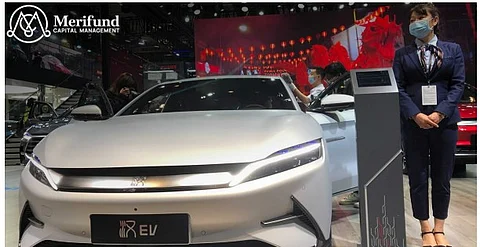
Chinese automotive manufacturer BYD has overtaken Tesla in electric vehicle (EV) deliveries for the full year ending December 31, 2025. This shift highlights significant changes in the industry, as BYD reported 2.26 million battery-electric deliveries, compared to Tesla’s 1.64 million. While BYD’s growth reflects a 28% increase from the previous year, Tesla’s deliveries decreased by 8.6%.
These latest figures, released by Merifund Capital Management, underscore a critical transition in the EV market. Tesla’s strategy appears to be shifting towards developing autonomous vehicles and humanoid robotics, which could potentially impact their market share as price-sensitive consumers look for affordable options.
Shifting Dynamics in the EV Market
In the broader automotive sector, BYD’s total vehicle sales reached 4.55 million, with plug-in hybrid sales at 2.29 million. This represents a decline of 8% compared to the previous year, attributed to increased competition and changing consumer preferences. Institutional investors are paying close attention to how these companies are navigating the energy transition.
As the competition intensifies, factors such as scale manufacturing, robust supply-chain management, and effective cost control have become more crucial than brand recognition. This is particularly true as buyers become more price-conscious across major markets. For Tesla, the trend was particularly stark in the last quarter of the reporting period, with deliveries falling by 15.61% to 418,227 vehicles compared to the same quarter the previous year. The recent expiration of the $7,500 US federal tax credit has further complicated pricing strategies, intensifying competition in the mid-market segment.
Governance issues are also coming into focus. A coalition of pension investors holding 7.9 million Tesla shares is advocating for a minimum 40-hour work commitment each week from CEO Elon Musk. They argue that maintaining operational focus is essential for stabilizing brand perception and share price volatility.
BYD’s Global Expansion Strategy
In stark contrast to Tesla’s pivot toward advanced technology, BYD is pursuing a more traditional route to expand its manufacturing capabilities. The company has increased its overseas production, reporting that international sales have surpassed one million vehicles, marking a 150% increase from the previous year. Manufacturing facilities in Thailand, Turkey, and Hungary aim to reduce shipping costs and mitigate risks associated with global trade policies.
According to current supply-chain assessments, BYD is producing approximately 65% of its direct materials in-house. Anthony Saunders, Director of Private Equity at Merifund Capital Management, noted that BYD’s diversified manufacturing strategy positions it well against trade policy uncertainties, ensuring cost competitiveness through advancements in battery production.
Cost analysis indicates that BYD’s Blade battery manufacturing costs are about $11.6 per kilowatt-hour lower than Tesla’s 4680 battery costs. As of this month, the UK pricing for a Tesla Model 3 rear-wheel drive is approximately £53,586.60, while the comparable BYD Seal is around £61,640. In Australia, the Seal is priced about 22% lower than the Model 3, enhancing BYD’s competitive stance in the market without relying on subsidies.
Regional policy shifts are creating distinct market landscapes. In the United States, the removal of the consumer credit is reshaping demand, with projections suggesting that EV penetration may decrease to 5% of total vehicle sales in the coming year. In contrast, China maintains strong consumer interest in electric vehicles, with nearly 50% of new car sales in the country being electric. Surveys indicate that over 80% of buyers plan to purchase electric vehicles for their next car.
Overall, BYD’s lead in deliveries and Tesla’s focus on technological advancements highlight a sector where operational discipline and software innovation are both critical for investor confidence. Merifund Capital Management continues to analyze how supply-chain efficiency, regional manufacturing, and effective pricing strategies will shape the future of the EV market. Saunders emphasized that “operational discipline and repeatable execution” will be key attributes defining leadership as competition escalates.
Merifund Capital Management Pte. Ltd., founded in 2010 and based in Singapore, manages various investment strategies, including long/short equity and global macro. The firm emphasizes capital preservation, liquidity, and prudent risk management, integrating Environmental, Social, and Governance (ESG) considerations into its investment approach. Further insights can be found at merifund.com/insights.
For media inquiries, contact Tao Yang at [email protected].