
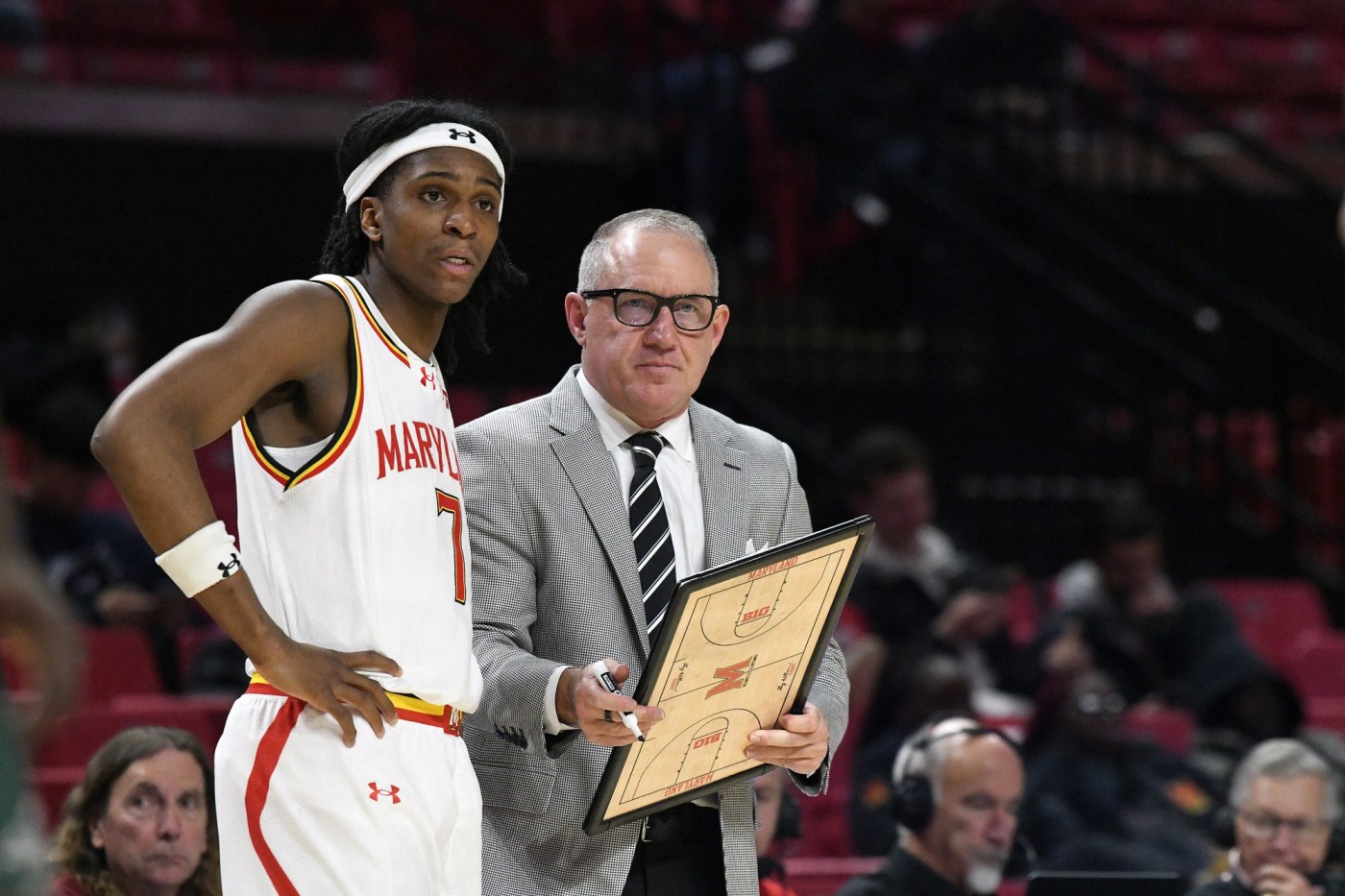
Maryland men’s basketball coach Buzz Williams emphasized his commitment to developing the Terrapins following a 64-54 defeat to the Oregon Ducks at Xfinity Center in College Park. His remarks came in the wake of criticism directed at the NCAA’s decision to allow James Nnaji, the No. 31 pick in the 2023 NBA draft, to enroll at Baylor University. While coaches like Tom Izzo from Michigan State and John Calipari from Kentucky voiced their disapproval, Williams maintained a focus on his team’s performance rather than engaging in the controversy.
After the loss that left Maryland with a 7-7 record and 0-3 in the Big Ten, Williams stated, “I’ve really tried to pour myself into giving my best to our group. I’m aware of what’s going on, but the worst reaction is an emotional reaction.” His comments reflect a desire to concentrate on strategic improvements rather than distractions from external debates.
Baylor announced Nnaji’s signing on December 24, 2023. The 21-year-old center from Makurdi, Nigeria, who stands at 7 feet, could potentially participate in his first game against TCU. This decision stirred significant backlash among other coaches, prompting Izzo to declare, “Shame on the NCAA. Shame on the coaches, too.” Danny Hurley of UConn called for clearer regulations, while Calipari criticized the NCAA for granting Nnaji four years of eligibility despite his draft status.
In response, Baylor’s coach Scott Drew defended the university’s actions, arguing that they are adhering to the current NCAA guidelines. On December 26, NCAA president Charlie Baker issued a statement clarifying that the organization would not grant eligibility to any athletes who have signed an NBA contract, although Nnaji has not officially signed with any NBA team.
Nnaji’s case is not unique. Other players with G League experience, such as Thierry Darlan and London Johnson, have also transitioned to college basketball, illustrating a trend of athletes navigating the complex landscape of eligibility rules.
As Williams reflected on the recent game, he acknowledged Maryland’s struggle against Oregon’s size advantage. The Ducks dominated the paint, outscoring the Terps 32-12 in that area, benefiting from their taller lineup. Williams remarked, “In a perfect world, we don’t want either,” referring to the challenges of defending both the interior and the three-point line.
The Terps faced additional obstacles in their quest for a stronger performance. Maryland has been hindered by injuries, notably the absence of senior power forward Pharrel Payne due to a right knee injury. In his place, Solomon Washington has stepped up, recording double-doubles in his last two games. Williams praised Washington, highlighting his defensive skills and adaptability in filling the gap left by Payne.
Despite his individual success, Washington expressed a desire for team victories, stating, “It’s good to score the ball, but it would feel better to win.” The Terps will look to bounce back in their next game against Indiana, as they aim to improve their standings in the conference.
As the Maryland team prepares for this crucial matchup, Williams remains focused on fostering a resilient and competitive mindset among his players, steering their attention away from the distractions of the NCAA controversy.