
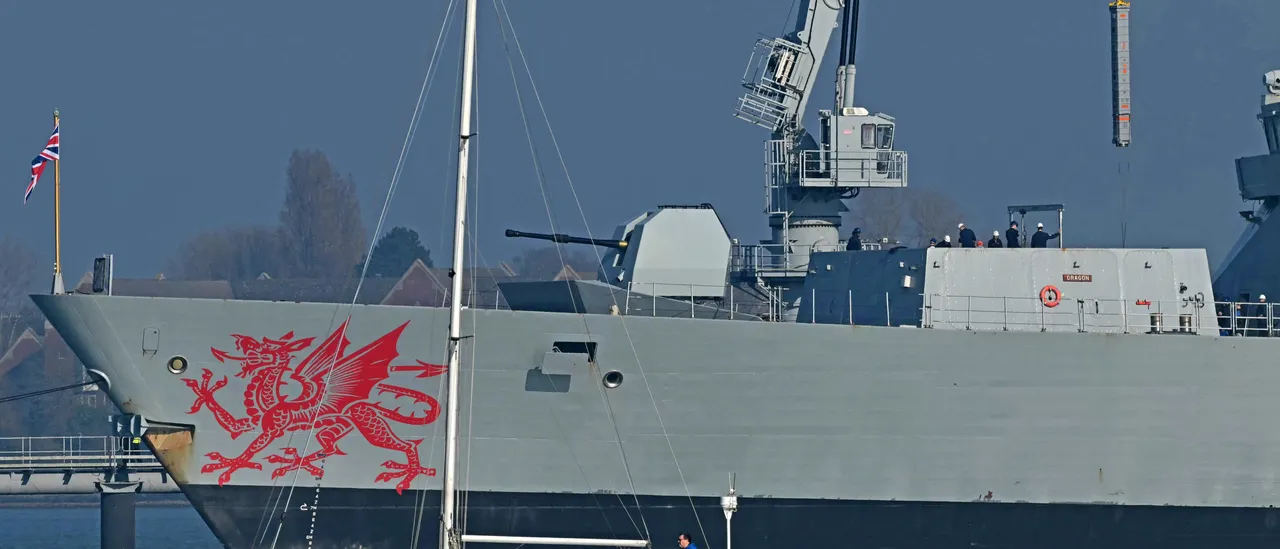
The Royal Navy’s preparations to counter Iranian drone threats have been significantly hampered due to operational limitations at the Portsmouth repair yard, which now adheres to a strict nine-to-five work schedule. This situation has caused delays in the deployment of the HMS Dragon, a Type 45 air-defense destroyer, to Cyprus, where it is intended to enhance security against potential Iranian drone strikes.
Union officials, as reported by The Telegraph, assert that the Ministry of Defence and the private contractor Serco introduced these restricted work hours as a cost-saving measure. They argue that these changes compromise military readiness during critical times. According to Mike Clancy, General Secretary of the Prospect union, the reliance on staff volunteering for overtime undermines national security. He expressed concerns that the current contract effectively eliminated 24/7 staffing at the historic Portsmouth base.
“Our members are stepping up to help, but such a vital service shouldn’t be dependent on goodwill from staff,” Clancy stated. “This contract has failed its first real encounter with a serious crisis and must be urgently reviewed and rectified.”
As HMS Dragon remains in dry dock, Defense Minister Al Carns acknowledged that the warship will not set sail until engineers complete necessary maintenance and weapon system overhauls, tailored for its new operational mission in the Mediterranean. He emphasized that the ship was originally configured for a different mission, necessitating significant modifications to its capabilities to defend against aerial threats.
The delay in HMS Dragon’s readiness places the UK at a disadvantage compared to international allies, particularly as French and Spanish warships have already arrived in the region. Military analysts note that the air-defense destroyer is now expected to reach Cyprus two weeks later than its counterparts.
While Serco Marine Services, the private firm overseeing port operations, has disputed the union’s claims, stating that its core hours extend from 07:00 to 19:00, union sources maintain that the contract’s terms are more rigid. They assert that several key tasks are restricted to standard weekday hours, hindering the Navy’s ability to prepare the ship for combat readiness efficiently.
The new contract, reportedly valued at £1 billion (approximately $1.34 billion), has drawn scrutiny for reducing essential operational coverage. Union representatives contend that this change has forced the Navy to depend on staff volunteering for weekend shifts to ensure the ship can be combat-ready.
As tensions escalate in the region, with the United States launching Operation Epic Fury alongside Israel’s Operation Lion’s Roar aimed at Iranian military targets, the urgency for the Royal Navy to respond effectively cannot be overstated. The ongoing situation underscores the critical need for a workforce capable of operating around the clock to address emerging threats.
As discussions around the contract and operational hours continue, the focus remains on ensuring that the Royal Navy can fulfill its duties without compromising national security.