
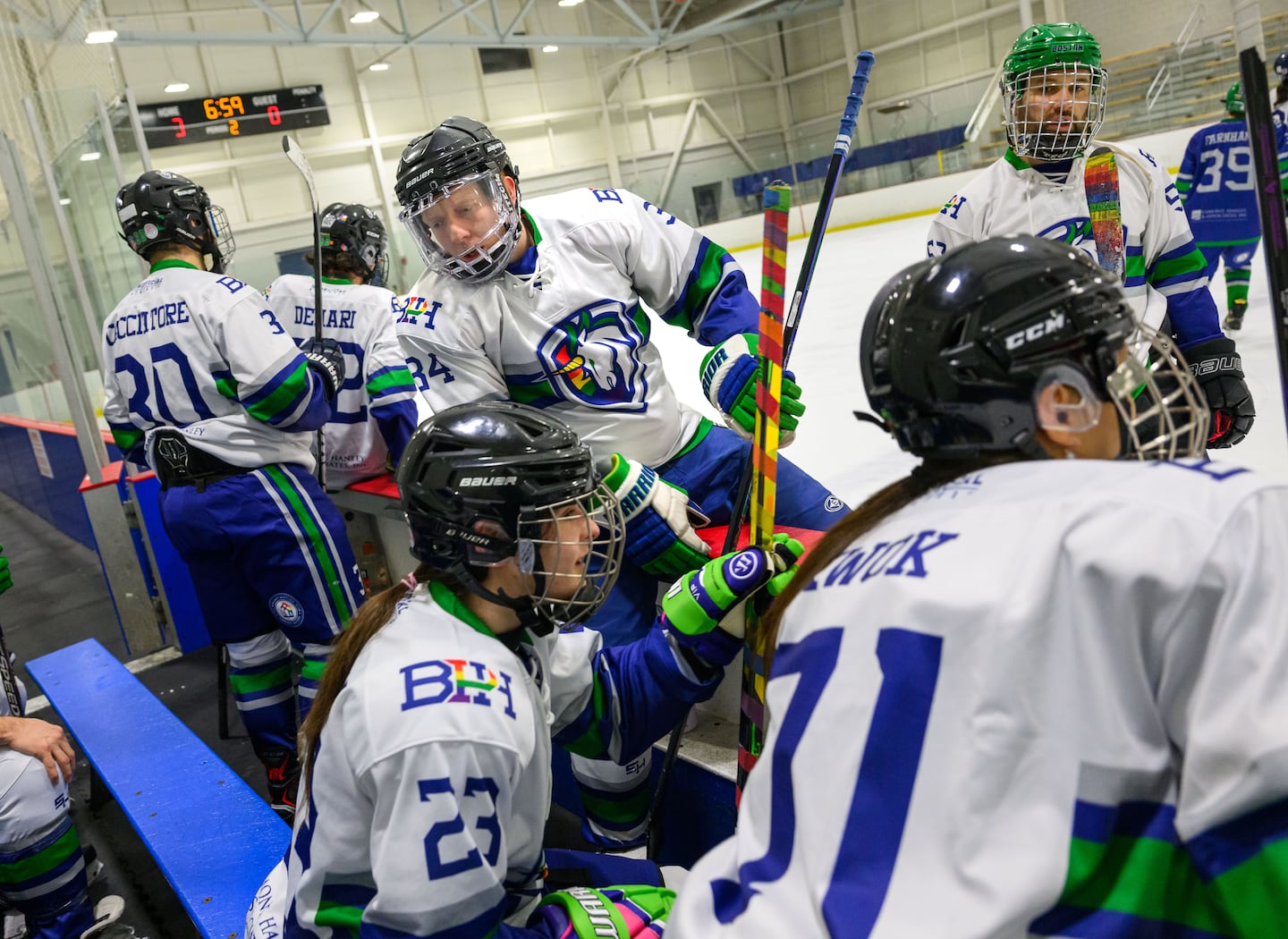
On March 15, 2024, the Boston Bruins will light up TD Garden with vibrant rainbow illuminations and adorn their sticks with rainbow-colored Pride Tape. This celebration marks the annual “Hockey Is for Everyone” night, an initiative aimed at promoting inclusivity within the sport and raising funds for the Boston Pride Hockey league. The event has gained heightened attention this year, largely due to the popularity of the HBO drama “Heated Rivalry,” which explores a romantic relationship between two closeted professional hockey players.
The series has become a viral sensation, extending its reach beyond the LGBTQ+ community to capture broad interest in mainstream pop culture. Despite the NHL’s long history—since its inception in 1917, the league has never seen an openly gay player—there are hopes that “Heated Rivalry” could inspire current players to come out. NHL Commissioner Gary Bettman remarked on the show’s potential to engage new fans, stating, “We’re well aware of ‘Heated Rivalry.’ In terms of embracing it, I think it’s a wonderful story.”
The series has influenced various local events, such as “Heated Rivalry” look-a-like contests and trivia nights, drawing in enthusiastic crowds. Merchandise featuring the fictional teams, the Boston Raiders and the Montreal Voyagers, has become increasingly popular, leading many previously indifferent fans to take a newfound interest in hockey. One attendee, Ryan Leblanc, expressed his excitement, stating, “I bought a Bruins ticket, and I’ve never been to a game in my life.”
While the show has sparked conversations about LGBTQ+ representation in hockey, some experts caution against expecting immediate changes in player dynamics. Jim Buzinski, co-founder of the LGBTQ+ sports news website Outsports, emphasized that coming out is a deeply personal journey. He noted that many athletes choose to reveal their identities after retirement, citing examples such as former NFL running back Dave Kopay and NBA player Jason Collins, who was the first active player in the four major American professional sports to come out in 2013.
In the NHL, Luke Prokop made history as the first openly gay player under contract, yet he remains in the minors. The significance of “Heated Rivalry” may lie less in prompting immediate disclosures from players and more in shifting attitudes within the sport. Edward Kian, a professor of sport management at Chowan University, suggested that the show could help challenge outdated perceptions within the NHL and among its fanbase.
Hockey culture, characterized by its physicality and hypermasculinity, often creates barriers for players considering coming out. Jett Stone, a clinical psychologist, explained that perceived differences can lead to a sense of liability among teammates, discouraging players from embracing their identities. This atmosphere has contributed to the exit of many LGBTQ+ youth from the sport, despite their passion for hockey.
Players like Kevin Corsino have shared similar experiences. After a successful youth in hockey, he left the sport due to pervasive homophobic language. “I knew how to skate before I could walk,” Corsino remarked. He eventually found his way to Boston Pride Hockey, a league with approximately 400 members, where he experienced a welcoming environment. “It was such a different atmosphere,” he recalled.
Another player, Jackie Farnham, also left hockey due to the intensity of homophobic slurs. He noted that while he initially overlooked the issue in middle school, high school brought a more aggressive culture that made him uncomfortable. Farnham returned to the rink only after discovering Boston Pride Hockey, where he felt he could genuinely be himself.
Since the airing of “Heated Rivalry,” Corsino has received numerous inquiries from LGBTQ+ players who had previously stepped away from the sport, expressing optimism that the show will encourage more individuals to return to hockey. Despite challenges, the NHL has made strides towards inclusivity, partnering with organizations like You Can Play, which aims to foster a sense of belonging for LGBTQ+ athletes.
While some decisions, such as the 2023 ban on specialty jerseys for pride nights, have faced backlash, the NHL’s eventual reversal indicates a commitment to inclusivity. The impact of “Heated Rivalry” may extend beyond the confines of the rink, as it resonates with diverse audiences, paving the way for a more open dialogue about identity in sports.
As the Bruins prepare for their Hockey Is for Everyone night, the cultural landscape of hockey is gradually shifting. Even if the show does not lead to immediate changes in player disclosures, it provides the LGBTQ+ community with a poignant representation of love and acceptance in sports. “The show has given us a fairy tale romance,” Buzinski noted, highlighting a narrative that has long been absent from the hockey world.
For many, “Heated Rivalry” symbolizes hope and potential change, reflecting a future where all players can feel safe and accepted regardless of their sexual orientation.