
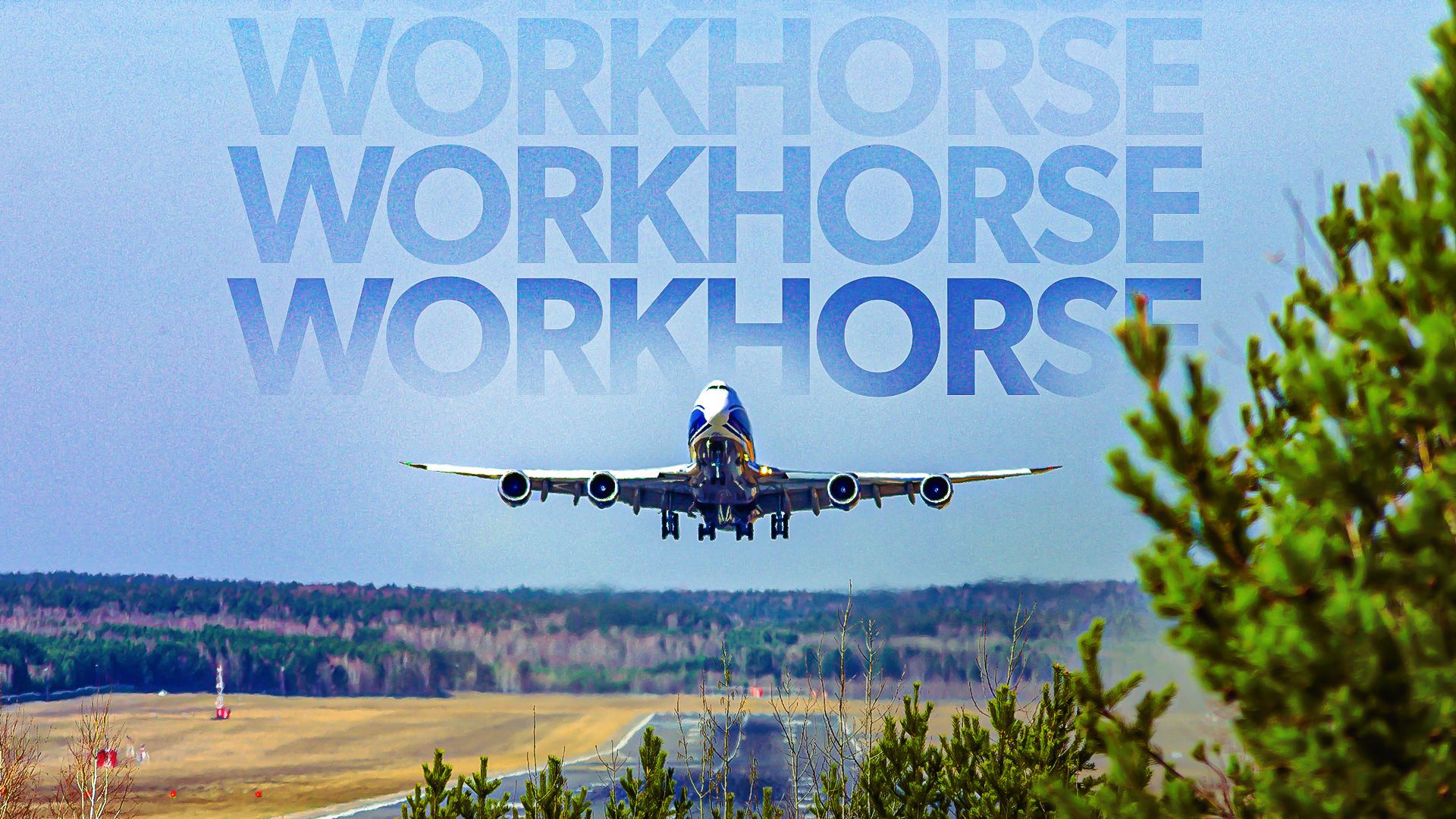
The Boeing 747, once a dominant force in transatlantic passenger travel, has now cemented its legacy as a critical player in the global cargo aviation sector. By 2026, over 300 Boeing 747 freighters, including the state-of-the-art 747-8F introduced in 2011, are actively transporting goods across long-haul trade routes, according to data from Boeing and leading cargo operators. This remarkable longevity is attributed to the aircraft’s unique capability to load oversized cargo through a hinged nose door, a feature that was integral to the aircraft’s design from its inception.
The Boeing 747 made its debut in commercial service with Pan American World Airways in January 1970, initially revolutionizing air travel with its unprecedented capacity. The aircraft could accommodate more than 350 passengers, significantly outpacing earlier models like the Boeing 707. This increase in capacity not only lowered ticket prices but also made long-distance travel more accessible. As the aircraft became the flagship for major airlines throughout the 1970s and 1980s, it quickly gained recognition for its potential as a freighter.
Evolution of the 747: From Passenger Giant to Cargo Specialist
Over its more than five-decade history, the Boeing 747 has evolved through several major variants, each introducing enhancements that improved performance and efficiency. The original 747-100 set the stage in 1970 with its high passenger capacity. This was followed by the 747-200, which featured more powerful engines and extended range, and the 747-300, which boasted an expanded upper deck. The most significant transformation occurred with the 747-400 in 1989, which incorporated advanced avionics and winglets, enhancing fuel efficiency.
In parallel to the passenger variants, Boeing developed dedicated freighter models. These included structural reinforcements and specialized loading systems designed for heavy cargo. Many passenger planes were converted into freighters, expanding the fleet of Boeing 747 cargo aircraft utilized by logistics companies globally.
The introduction of the 747-8F marked a new chapter in cargo aviation. This variant incorporated advanced technologies derived from the Boeing 787, including a stretched fuselage and redesigned wings. The 747-8F not only improved fuel efficiency but also enhanced cargo capacity and reduced noise emissions. Each engine, the GEnx-2B67, produces around 66,500 pounds of thrust while achieving lower fuel consumption.
The Cargo Pioneers and the Future of the 747
The 747 has been a game changer in the cargo sector, allowing airlines to transport oversized freight that smaller aircraft cannot accommodate. The early models, such as the 747-200F, were specifically engineered for cargo operations, featuring a nose door that facilitates loading long or bulky items directly into the aircraft. This design has proven invaluable for industries requiring transportation of heavy machinery or large components.
Cargo carriers like Cargolux and Atlas Air have built extensive fleets around the 747 freighter models, utilizing their capabilities to connect major logistics hubs worldwide. The aircraft’s ability to handle heavy loads and oversized cargo continues to make it indispensable in global trade.
Despite the emergence of more modern twin-engine freighters like the Boeing 777F, the Boeing 747 maintains a unique position in the cargo industry. Its vast cargo volume, exceeding 30,000 cubic feet in the 747-8F, allows operators to transport significant amounts of freight on a single flight. Additionally, the versatility of the nose-loading feature is crucial for sectors such as energy and aerospace.
As of 2023, Boeing ceased production of the 747, largely due to market shifts towards more fuel-efficient twin-engine aircraft. The decline in passenger demand for the 747, combined with a reliance on cargo orders to sustain production, led to the final deliveries of the aircraft. Despite this, the legacy of the Boeing 747 as a cargo titan remains intact, with hundreds of freighters still in operation, proving that while the “Queen of the Skies” may have shifted from carrying passengers to moving pallets, it continues to play a vital role in the global economy.