
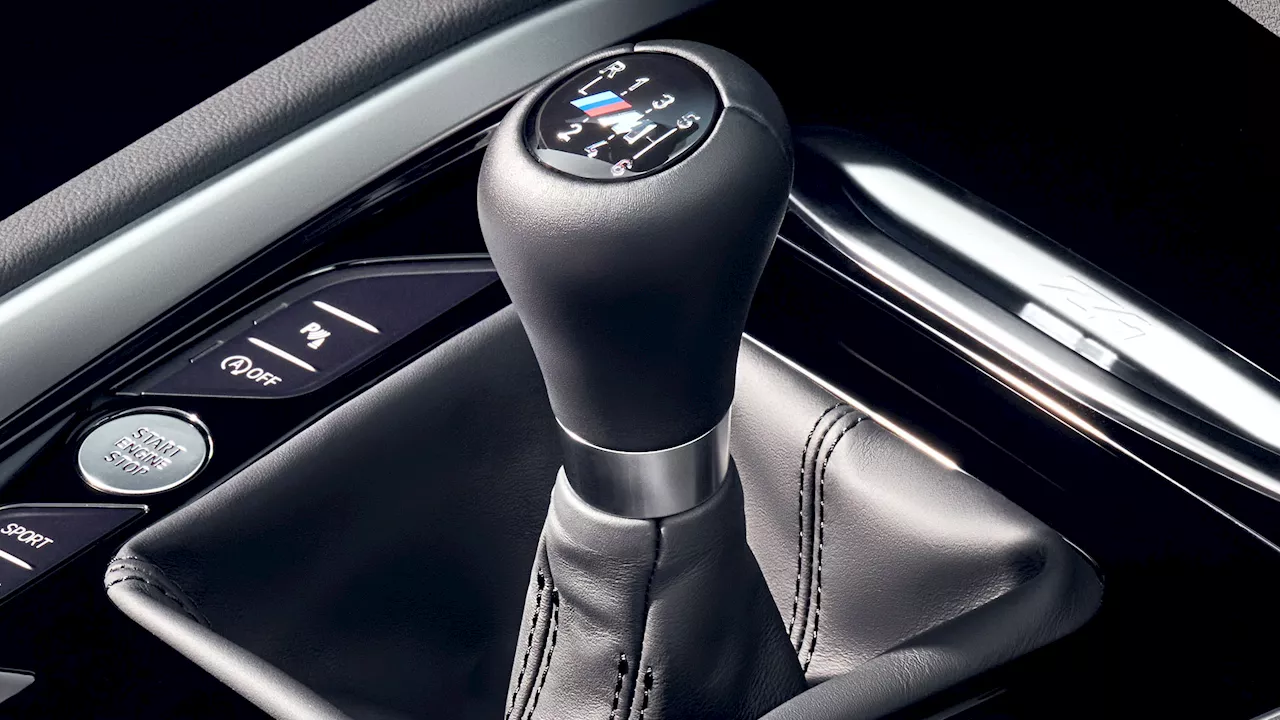
BMW is making strides to enhance the safety of manual transmissions. The German carmaker has patented a new design aimed at reducing the risk of “money shifts,” a costly mistake that occurs when a driver accidentally downshifts instead of upshifting. This innovative approach reflects BMW’s commitment to retaining manual gearboxes, even as competition from brands like Audi and Mercedes-Benz has diminished in this area.
The patent, uncovered by CarBuzz, was filed with the German Patent and Trade Mark Office. It outlines a manual transmission system equipped with a locking unit that spans all gear gates. This mechanism functions similarly to existing lockout systems that prevent drivers from unintentionally selecting reverse. By incorporating both a locking system and a sensor to monitor gear selection and crankshaft speed, the new design could potentially prevent unsafe downshifts based on real-time driving conditions.
The term “money shift” describes a situation where a driver mistakenly shifts into a lower gear, such as moving to second gear instead of fourth while accelerating rapidly. The consequences of this error can be severe, often leading to engine over-revving and potentially catastrophic damage to the vehicle. While one might expect that experienced manual drivers would avoid such mistakes, the development of this new system demonstrates BMW’s proactive approach to protecting its customers.
This advanced transmission would monitor engine speed and gear selection, physically blocking the shifter from engaging a gear that could endanger the powertrain. By extending the concept of reverse lockout across all gears, BMW aims to enhance the driving experience while safeguarding the vehicle’s integrity.
As of now, the BMW M2, M3, and M4 remain the only models offered with manual transmissions, following the eventual discontinuation of the Z4. The M2 is expected to retain the manual option for several more years, and there is hope that future iterations of the M3 and M4 will also feature this transmission, potentially equipped with the new safety system.
Despite the growing trend towards electrification in the automotive industry, BMW’s efforts suggest a continued appreciation for the manual driving experience. There is a clear indication that the brand values the engagement and control offered by manual gearboxes, aiming to refine their functionality rather than abandon them altogether.
In a market where traditional transmissions are becoming less common, BMW’s innovations may offer a viable path for enthusiasts who still crave the tactile feedback of a manual gearbox. This commitment to improvement could help preserve the manual driving experience for future generations, even as the industry adapts to new technologies.
As BMW continues to refine its manual transmission offerings, the potential impact on both customer satisfaction and the company’s reputation as a performance-oriented brand remains significant. With this patent, BMW is not just holding onto tradition; it is actively working to enhance the safety and functionality of manual transmissions in an evolving automotive landscape.