
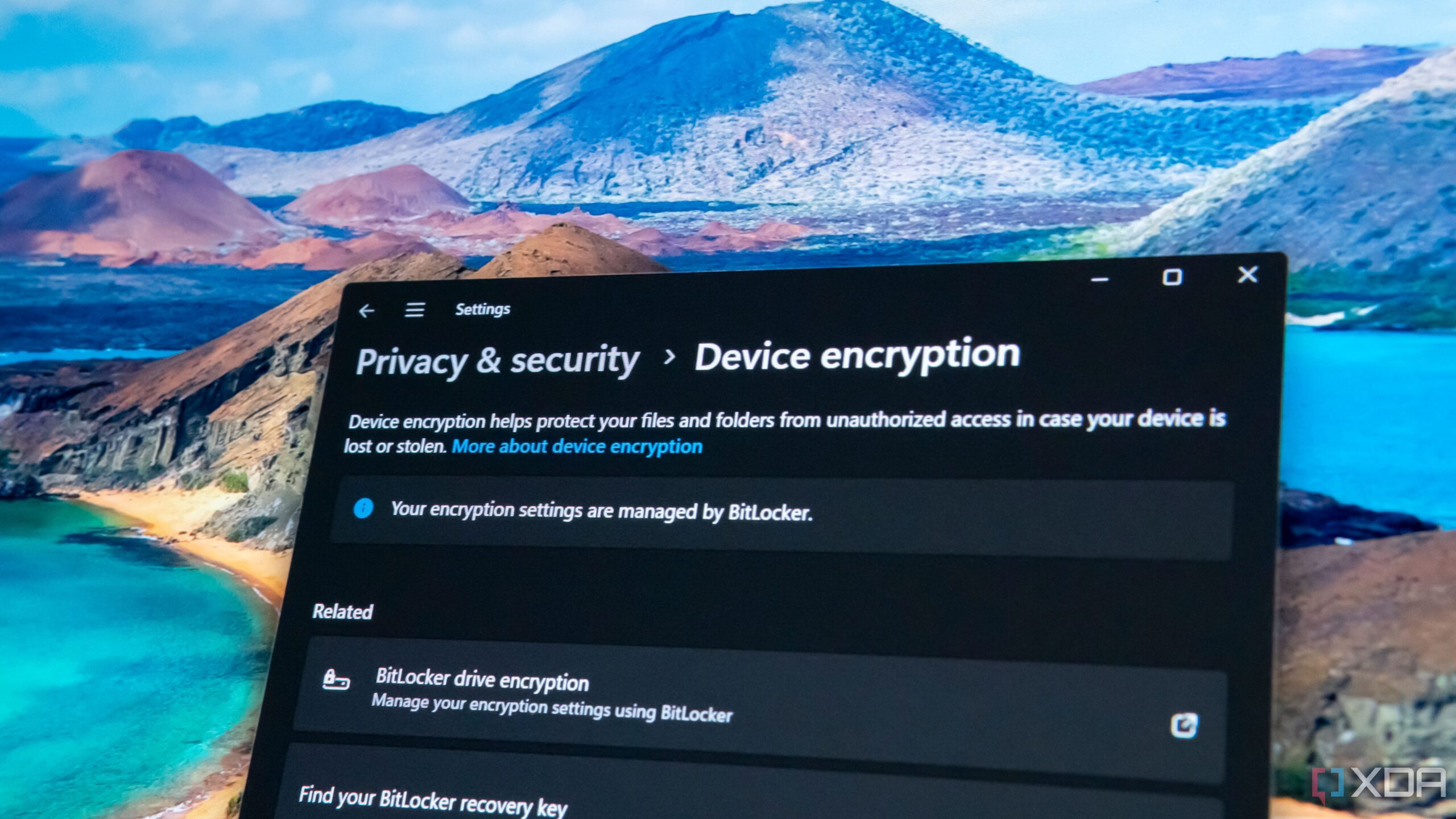
URGENT UPDATE: New reports confirm that BitLocker remains the primary drive encryption tool for Windows users, particularly for home use. This essential feature, part of Windows Pro, Education, and Enterprise editions, provides robust protection against data breaches, especially on mobile devices.
With rising cyber threats, the importance of drive encryption cannot be overstated. BitLocker safeguards critical files, preventing unauthorized access in case of device loss or theft. A recent survey highlights that many users, including journalists and professionals, rely on BitLocker to secure sensitive information such as interview transcripts and financial documents.
KEY FACTS: BitLocker applies enterprise-grade encryption to various storage devices—fixed, removable, or virtual—at no additional cost. It’s user-friendly, requiring no extra software installation, and is easy for home users to set up. For enterprises, it integrates seamlessly with Microsoft’s configuration provider and Group Policy, streamlining management for IT administrators.
However, authorities warn that while BitLocker is a trusted encryption tool, it can be exploited by ransomware like ShrinkLocker. These malicious attacks can use BitLocker’s legitimate functionality to extort victims, highlighting the need for vigilance.
HOW TO ENABLE BITLOCKER: Users can activate BitLocker by right-clicking the drive icon and selecting “Turn on BitLocker” or through the “BitLocker Drive Encryption” page under Windows’ “System and Security” panel. At a minimum, users must set a password to unlock their drives. Enhanced security options include using an external hardware key or a Trusted Platform Module (TPM) for stronger authentication.
Many users worry that encryption might slow down their systems. However, advancements in hardware-accelerated encryption mean that modern systems—especially those with processors made after 2011—experience minimal performance impact. Tests from iSunShare indicate that while write speeds on HDDs may decrease, read performance typically remains unchanged. For example, a 240 GB Toshiba Q200EX SSD showed less than a 1% drop in read performance with BitLocker enabled.
Nevertheless, users must manage their BitLocker keys carefully. Losing a password or removable startup key can result in irreversible data loss without the recovery key, which can also be misplaced. This highlights the importance of securely storing recovery keys, whether digital or physical.
While BitLocker is highly effective for Windows users, alternatives exist. Tools like VeraCrypt offer additional features, including cross-platform support and multiple encryption algorithms. However, BitLocker remains a convenient option for most users, balancing security and performance without significant drawbacks.
As cyber threats continue to evolve, the reliance on BitLocker for data security is poised to grow. Users are encouraged to take immediate action to enable this critical feature and safeguard their digital assets. Share this information to help others understand the importance of drive encryption today.