
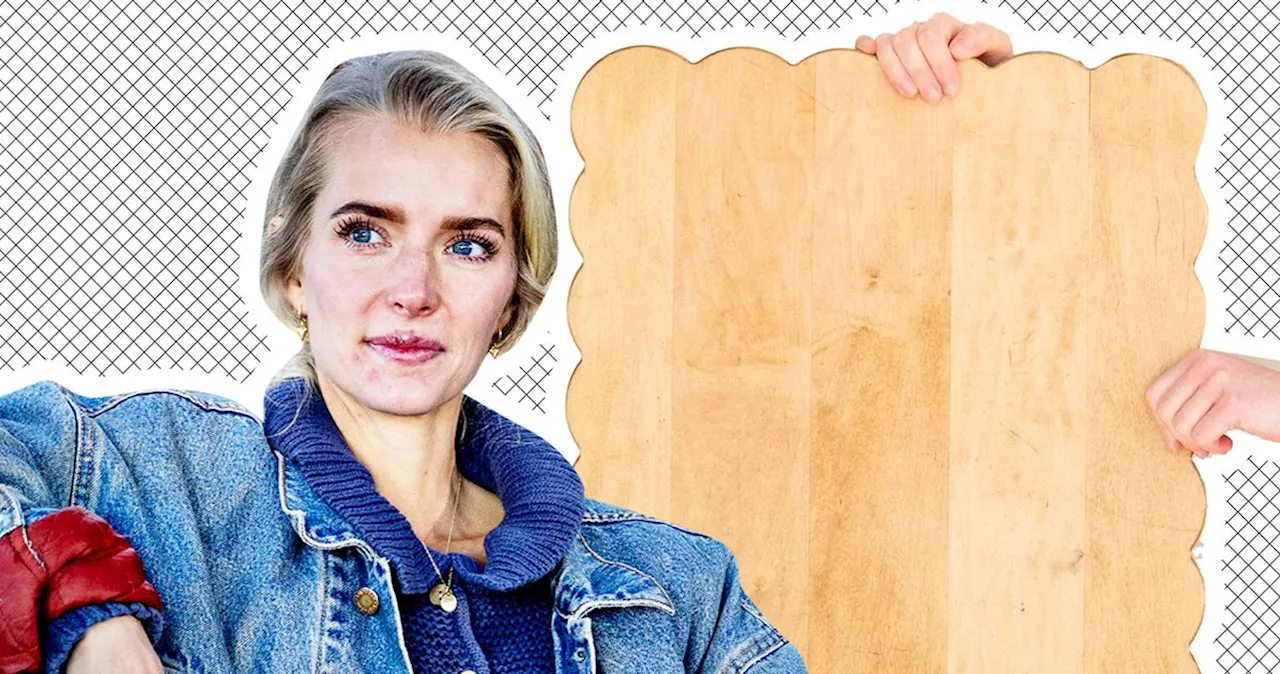
The recent announcement of Ballerina Farm’s premium scalloped wood cutting board, priced at $259, has ignited a heated discussion on social media, particularly on TikTok. In response to the backlash, founder Hannah Neeleman released an eight-minute video defending the product and its pricing.
Critics have raised concerns about the board’s construction quality. A TikTok user known as Rustic Hippies highlighted that the scalloped design could lead to warping and bowing over time, especially after exposure to water. “People holding up this board have shown that it’s already warped and bowed because it sat in their sink and got wet,” she stated. This criticism echoes broader sentiments among users who feel $259 is excessive for a cutting board, questioning its intended use as a practical kitchen tool versus a decorative item.
The backlash has not gone unnoticed by Neeleman, who defended her product vehemently. She acknowledged the board’s high price, explaining that it is handcrafted in Utah by a local husband-and-wife team who have become friends of hers. The weight of the boards also contributes significantly to shipping costs. While she refrained from detailing specific wood grain choices, she emphasized the various quality decisions made during production. “It wouldn’t be exciting or fun or fulfilling to me to cut corners on things and sell them at a lower price,” she remarked.
Despite the controversy, some buyers have praised the cutting board on various platforms, calling it “beautiful” and “very well made.” Yet, the polarized opinions reflect a growing tension between luxury positioning and consumer expectations.
In her response, Neeleman also touched on the pressures of increased visibility on social media. “New eyes come in that make these assumptions,” she stated, addressing accusations that she and her husband, Daniel Neeleman, are not genuine homesteaders. While she admitted they are relatively new to agriculture, she clarified that Daniel’s father, founder of JetBlue, has not provided them financial support, stating, “We started really at ground zero.”
The incident illustrates the complexities of marketing high-end products in a competitive online environment. As consumer expectations evolve, brands like Ballerina Farm must navigate the delicate balance between premium pricing and perceived value. While some customers are willing to invest in quality kitchenware, others may be deterred by what they deem excessive costs for everyday items.
This situation serves as a reminder of the challenges faced by artisans and small businesses in a market increasingly influenced by social media discourse. As Ballerina Farm continues to engage with its audience, updates on product care and quality assurance are anticipated to address some of the concerns raised in this ongoing conversation.