
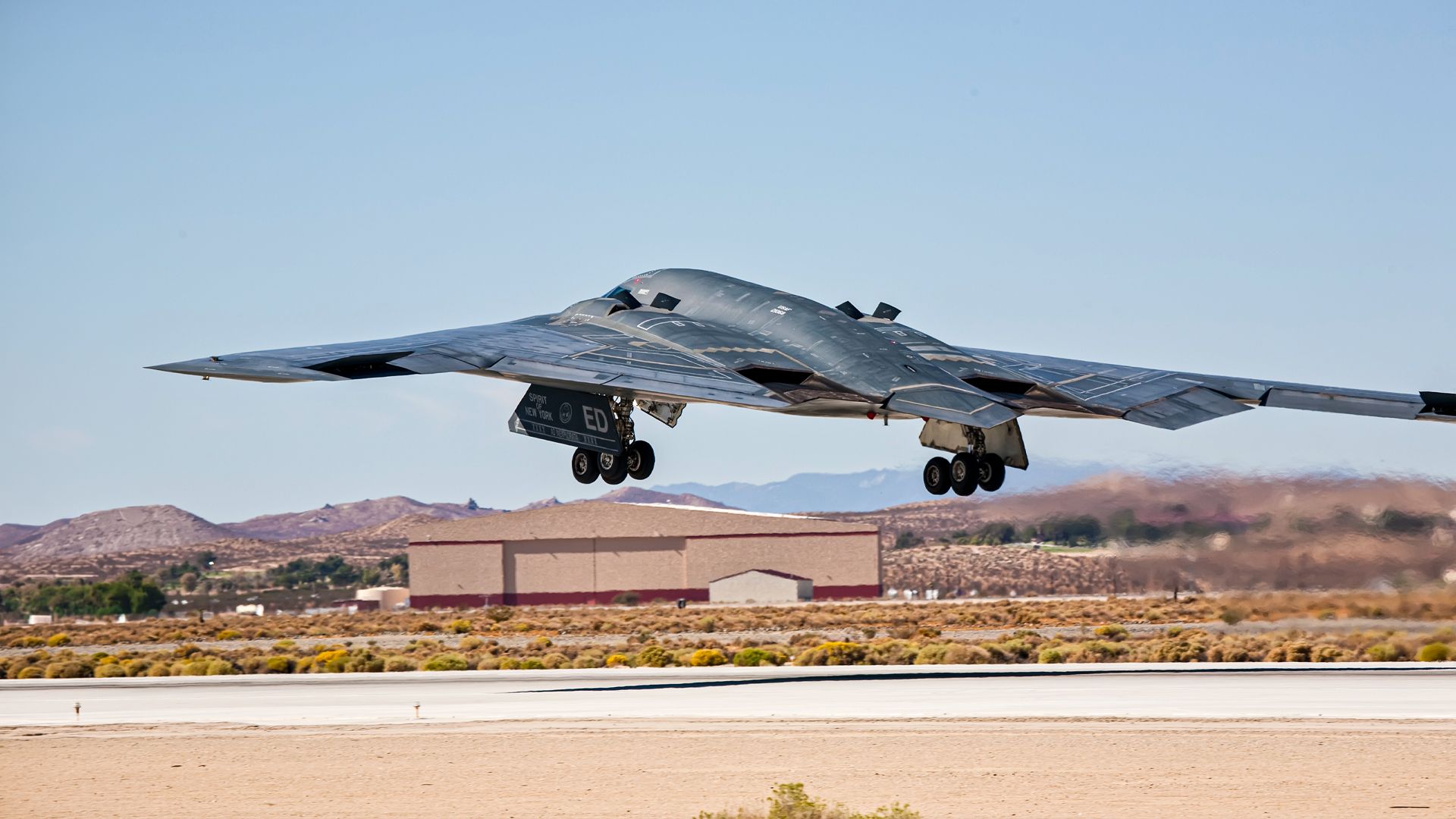
The Northrop B-2 Spirit bomber is renowned for its unique tailless design, a feature that distinguishes it from earlier military aircraft. This innovative design has influenced the upcoming B-21 Raider and is reflected in new Chinese fighter jets and autonomous aircraft. Since its introduction, the B-2 has successfully fulfilled its original mission parameters, proving its effectiveness as the first post-war strategic bomber for the United States Air Force.
The Evolution of Bomber Design
The B-2 Spirit represents a significant advancement in military aviation. Unlike its predecessors, such as the B-52 Stratofortress and the B-1B Lancer, which were based on different design philosophies, the B-2’s flying-wing configuration optimizes stealth. This design allows it to evade enemy radar systems while conducting long-range missions. As a result, the upcoming B-21 Raider is expected to closely resemble the B-2, continuing the tailless trend that enhances stealth capabilities.
Eliminating the tail stabilizers contributes to the B-2’s low radar cross-section (RCS). The absence of vertical surfaces minimizes radar returns, allowing the aircraft to maintain a smooth profile that scatters radar waves effectively. This design choice also reduces drag, enhancing the bomber’s range and endurance. According to military analysts, the B-2 is essentially a long-range radar-absorbing platform, engineered for subsonic cruise and high-altitude operations.
While the B-2 achieves remarkable stealth, it faces challenges due to the absence of traditional tail stabilizers. The tailless design sacrifices natural aerodynamic stability, making the aircraft inherently less stable. To counterbalance this, the B-2 relies on advanced fly-by-wire systems that continuously adjust flight parameters. This reliance on technology means the B-2 lacks the maneuverability found in fighter jets, which are designed for agility in combat scenarios.
The Future of Stealth Aircraft
As the United States Air Force looks to the future, the B-21 Raider is set to become a cornerstone of its strategic bombing capabilities. Northrop Grumman asserts that the B-21 will offer an advanced combination of range, payload, and survivability. The aircraft is designed to penetrate sophisticated enemy defenses, delivering precision strikes globally.
In contrast, the Lockheed Martin F-22 Raptor retains its tail surfaces, which are essential for its role as an air dominance fighter. The F-22 requires agility and high maneuverability for air-to-air engagements, which necessitates the presence of traditional tail stabilizers. While the F-22 incorporates stealth features, its operational requirements differ significantly from those of the B-2 and the forthcoming B-21.
Technological advancements are paving the way for a new generation of fighter jets that may also adopt tailless designs. Emerging prototypes, such as China’s J-36, showcase designs without tails, emphasizing a trend toward all-aspect stealth. The anticipated F-47, expected around 2030, may follow a similar path, focusing on extreme stealth while possibly incorporating alternative control mechanisms.
As the B-2 Spirit approaches its third decade of service, the U.S. Air Force recognizes the need to transition to next-generation platforms. Currently, only 19 B-2 airframes remain operational, which highlights the urgency for the B-21 program. In February 2026, the Air Force announced a $4.6 billion investment to accelerate the B-21’s development and increase annual production capacity by 25%, ensuring timely delivery of this vital aircraft.
The evolution of bomber design, particularly the B-2’s tailless configuration, has set a precedent that influences current and future military aviation. As operational demands shift, the integration of stealth, advanced technology, and innovative designs will shape the future of aerial warfare.