
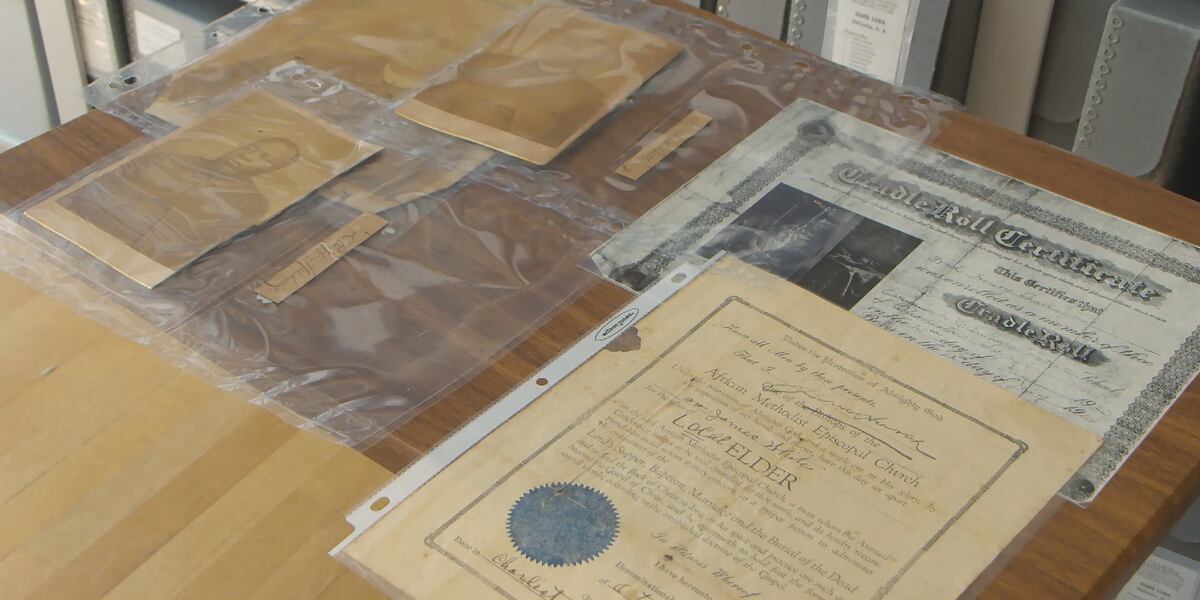
The Avery Research Center in Charleston, S.C., is actively participating in a nationwide initiative aimed at documenting the names of an estimated 10 million individuals who were enslaved in the United States. This effort, in collaboration with American Ancestors, seeks to restore the names and personal histories of African Americans who lived from the 1520s to the 1860s. Recently, the center has focused its efforts on collaborating with Mother Emanuel AME Church to preserve the church’s historical records, which play a crucial role in this endeavor.
The initiative’s objective is to make church materials more accessible for genealogical and historical research. Lee Bennett Jr., the historian for Mother Emanuel, emphasized the importance of sharing these narratives. “It’s important for us to tell our story. If we don’t tell our story, somebody else will tell a different story,” he stated. The partnership will not only help protect the church’s archives but will also ensure they are processed correctly for future use.
Preserving Historical Archives
Mother Emanuel AME Church, established in 1816 by Morris Brown, holds significant historical value as the oldest AME church in the South. With nearly 208 years of history, the church possesses a vast array of records, including documents related to ministry, baptisms, and burials. Bennett noted that the recent dumping of hundreds of commercial tires on church grounds highlights the need for proper preservation efforts.
College of Charleston students and staff are contributing to this initiative by sorting and preserving the records. Shania Dami, a freshman and student archival assistant, described the meticulous process involved. “We get a box, and in that box, sometimes there are folders or books or even just stamps and checks. If it has staples, we remove them to prevent rust damage,” she explained. The care taken in handling these documents reflects the project’s respect for the past.
Connecting with Ancestral Roots
Participants in this project express a deep sense of honor in being part of such a significant undertaking. Veer Mehta, an archivist at the Avery Research Center, pointed out Charleston’s pivotal role in the history of slavery. “Charleston was the slave capital of the Western world, so you have to talk about Charleston when you do any ancestral data related to African-American research,” he said. He also noted that the partnership allows for a broader narrative surrounding Mother Emanuel, moving beyond the tragic mass shooting in 2015 that claimed nine lives.
Marleena De Los Santos, a high school intern at the Avery Research Center, shared her experience working on this project. “Nowadays, I feel like it’s more common for people to not know where they came from, but it really is important,” she stated. “That’s literally you. That’s how you were made. It’s a part of you, and you should know.”
The ultimate goal of this national project is to locate living descendants of those enslaved and honor their family histories through a publicly accessible database. Bennett highlighted the importance of providing a platform for individuals seeking to trace their lineage. “Often people will come back and say my great-great-grandmother was buried in the cemetery here, but they don’t know where to start,” he said. This initiative aims to ensure that these stories and identities are never forgotten as the work continues to unfold.