
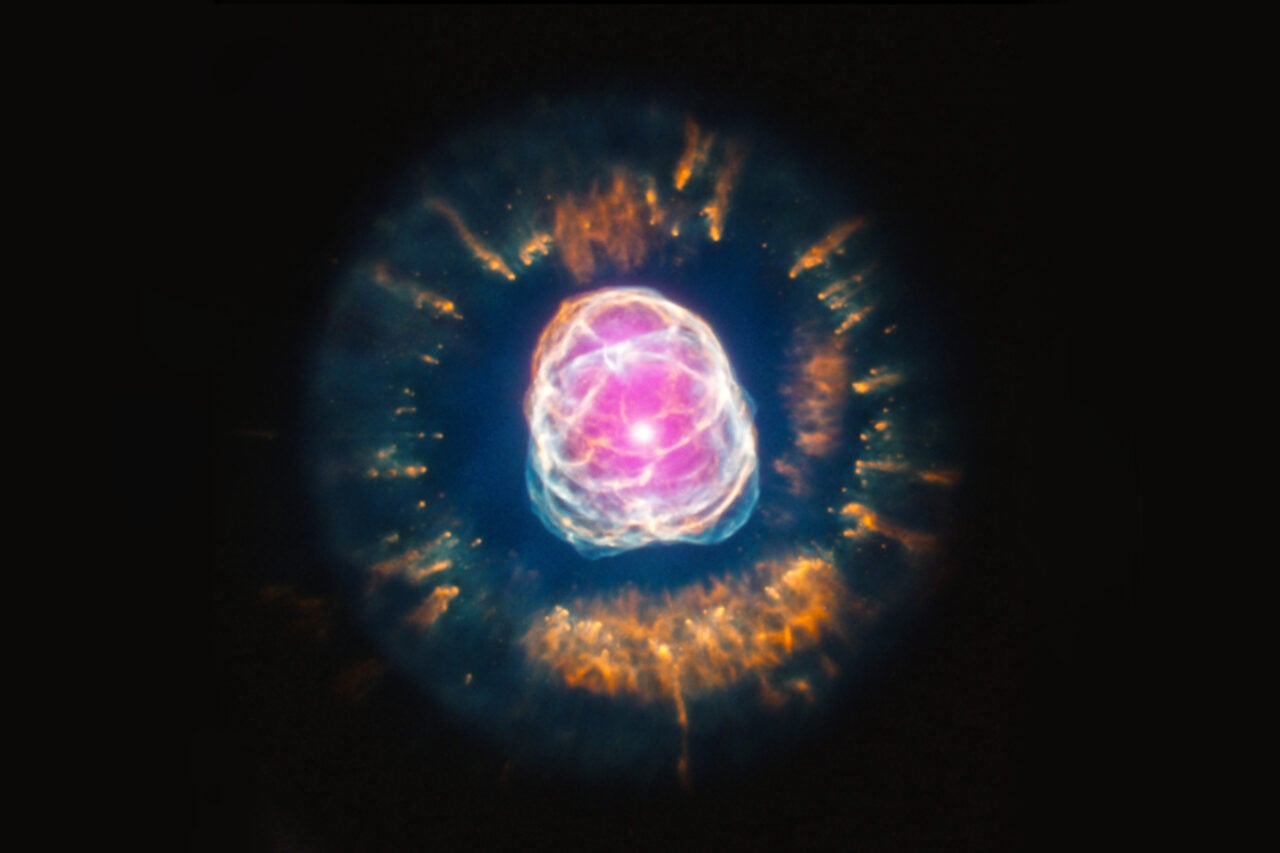
Astrophysicists from the University of British Columbia have proposed a novel approach to understanding dark matter by examining the behavior of white dwarfs, often referred to as “zombie stars.” Their research suggests that these dense remnants of stars could be connected to axions, a hypothetical particle that is a leading candidate for dark matter. While their findings, presented in a preprint on arXiv, do not provide direct evidence of axions, they open new avenues for exploration in the field of astrophysics.
The concept of axions was first introduced in 1977 to address the imbalance between matter and antimatter in the quantum realm. Despite extensive efforts, no definite detection of axions has been achieved. Scientists believe that dark matter, which constitutes approximately 85% of the universe, interacts very weakly with visible matter, making it difficult to study. The properties of axions align closely with the characteristics expected of dark matter, leading researchers to consider them as viable candidates.
White dwarfs, the remnants of stars that have exhausted their nuclear fuel, present a unique opportunity for such studies. These celestial bodies are incredibly dense and, under normal circumstances, would collapse under gravitational pressure. Yet, they remain stable due to a phenomenon known as electron degeneracy pressure, which prevents electrons from occupying the same energy state. This intricate balance allows white dwarfs to persist for billions of years.
Researchers have noted that some white dwarfs cool more rapidly than anticipated. This unexpected behavior raises intriguing questions about the potential production of axions during their cooling process. If axions were being generated, they could siphon energy from the star, leading to a faster cooling rate. To investigate this hypothesis, the team utilized archival data from the Hubble Space Telescope and conducted simulations to explore the influence of axions on white dwarf activity.
In their analysis, the researchers made several predictions regarding the temperature and age of white dwarfs with and without the cooling effects of axions. They then compared their theoretical models with observational data from 47 Tucanae, a globular cluster rich in white dwarfs. Despite their efforts, the findings did not reveal evidence supporting axion-induced cooling.
Nevertheless, the research yielded significant insights. The study established a new constraint on the likelihood of electrons producing axions, estimating the chance at roughly one in a trillion. This finding is important because, in the search for elusive dark matter candidates, understanding what does not work can often be as valuable as finding positive evidence.
Paul Sutter, an astrophysicist at Johns Hopkins University, commented on the implications of the study, stating, “This result doesn’t rule out axions entirely, but it does say it’s unlikely that electrons and axions directly interact with each other.” He emphasized the necessity for innovative approaches in the ongoing quest for axions.
As researchers continue to explore the mysteries of dark matter, the unique characteristics of white dwarfs may provide critical insights. The journey to uncover the nature of axions and dark matter remains ongoing, with each new study contributing to a deeper understanding of the universe.