
Astronomers have made significant strides in solar observation through a groundbreaking collaboration between the National Science Foundation’s Daniel K. Inouye Solar Telescope and the European Space Agency’s Solar Orbiter. This partnership, which seeks to enhance our understanding of solar phenomena, allowed scientists to observe the same region of the Sun from two different perspectives, unveiling intricate details previously hidden from view.
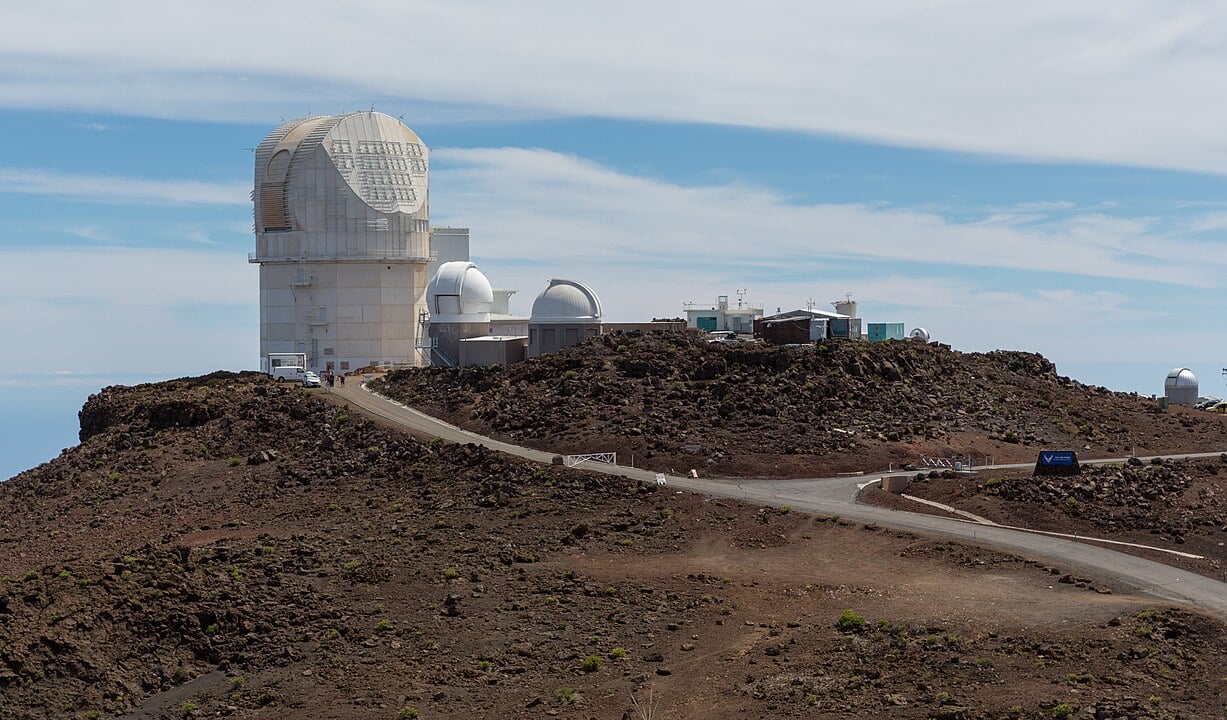
Located near the summit of Maui’s Haleakalā, the Inouye Telescope specializes in examining the Sun’s middle layers, including the photosphere and chromosphere. Meanwhile, the Solar Orbiter, positioned one-third closer to the Sun, captures data from the hotter transition region and the solar corona. This dual approach creates a comprehensive view of solar structures and dynamics, which is impossible to achieve with either instrument alone.
In October 2022, the two instruments jointly observed a decaying active region on the Sun, marking a pivotal moment in solar research. The precision of this collaboration is remarkable. To illustrate, if the Sun were represented by a chair at one end of a football field, the Solar Orbiter’s field of view would be akin to a five-pound note placed on that chair. Within that area, the Inouye’s observing window would be represented by a tiny coin, with the structures being studied smaller than half the thickness of that coin.
The observations yielded significant discoveries, including the identification of structures known as “campfires.” These small bright spots, observed in extreme ultraviolet wavelengths, were largely overlooked until recent advancements in solar instrumentation. While each campfire appears insignificant on its own, they occur in vast numbers, potentially providing answers to longstanding questions about solar behavior. Notably, they may help explain why the outer atmosphere of the Sun reaches temperatures exceeding one million degrees Celsius, while the visible surface remains relatively cool at around 5,500 degrees Celsius.
This collaboration not only showcases technological prowess but also allows scientists to track how small-scale solar events interact with larger magnetic structures. By bridging ground-based and space-based observations, researchers can analyze how these interactions influence the heating of the solar corona, furthering our understanding of solar dynamics.
The advancements in solar observation reflect a new golden era in solar research, empowering scientists to explore the complexities of our star with unprecedented detail and accuracy. As researchers continue to analyze the data collected from this collaboration, the findings promise to deepen our understanding of solar phenomena and their impact on space weather, ultimately benefiting various fields, including telecommunications and satellite operations.
The future of solar discovery appears bright, with continued collaboration and innovation paving the way for new insights into our ever-changing Sun.