
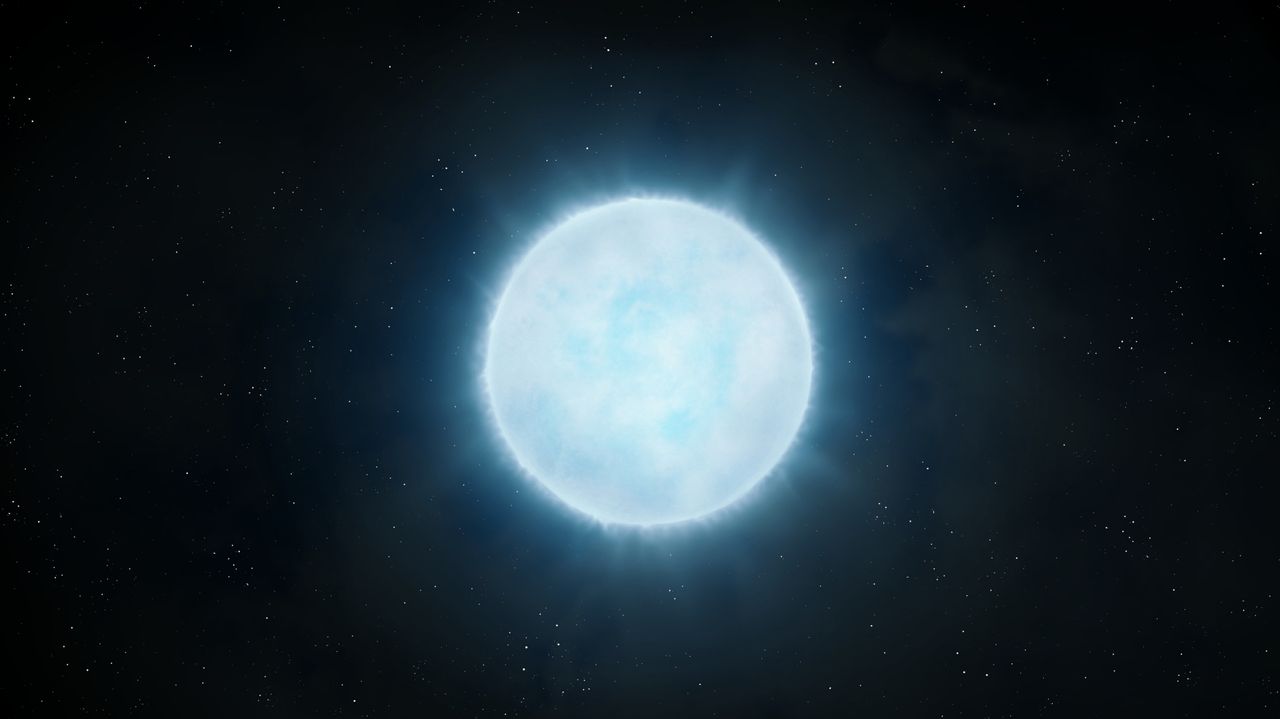
Research into the elusive axion, a theoretical particle proposed to address issues with the strong nuclear force, is gaining momentum as astronomers utilize archival data from the Hubble Space Telescope. This investigation focuses on white dwarfs—dense remnants of stars—which may provide insight into the nature of dark matter. A study published in November 2025 on the open-access server arXiv outlines a method to test axion models based on these celestial objects.
Historically, attempts to detect axions through particle collider experiments have not yielded results, causing the concept to fade from prominence. However, recent interest has revived discussions about the axion’s potential role in explaining dark matter, a mysterious substance that makes up a significant portion of the universe’s mass. Researchers have theorized that axions could be produced in abundance yet remain undetected, making direct observation challenging.
White dwarfs, characterized by their extraordinary density—packing the mass of the sun into a volume smaller than that of Earth—are crucial to this research. These stellar remnants maintain stability against gravitational collapse through a phenomenon known as electron degeneracy pressure, which arises from quantum mechanics. In this scenario, electrons resist being compressed into the same state, creating a stable condition for the white dwarf.
The study’s primary hypothesis suggests that axions might form from high-energy electrons within white dwarfs. If electrons reach significant speeds—close to the speed of light—they could potentially generate axions. The escape of these axions could lead to a cooling effect on the white dwarfs, as they do not generate energy independently. Consequently, the cooling process could accelerate, providing a potential observable consequence of axion production.
Using advanced simulation software, researchers modeled the expected temperatures of white dwarfs based on their ages, considering both the effects of axion cooling and the normal evolutionary processes. They then compared these predictions with observational data from the globular cluster 47 Tucanae. This cluster was particularly valuable to the study because all the white dwarfs within it formed around the same time, allowing for a more uniform analysis.
Despite the extensive analysis, the researchers found no evidence supporting the cooling effect attributed to axions among the white dwarf population. Their findings established new constraints regarding the interaction between electrons and axions, indicating that electrons are unlikely to produce axions more efficiently than once every trillion interactions. While this result does not completely dismiss the existence of axions, it suggests that the direct interaction between these particles and electrons is improbable.
As the search for axions continues, astronomers will need to develop innovative methods to uncover these elusive particles. This ongoing research not only deepens our understanding of white dwarfs but also enhances the broader quest to unravel the mysteries surrounding dark matter and the fundamental forces shaping our universe.