
The American Psychological Association (APA) recently revised its “Resolution on Antisemitism” to clarify its stance on criticisms of Israel. The update, made during the organization’s meeting in October 2023, removes previous guidance that equated any opposition to the state of Israel, including concerns about its military actions in Gaza, with antisemitism.
While the new resolution retains examples of antisemitic views, such as holding Jews collectively responsible for the actions of the Israeli state, it explicitly states that legitimate criticism of Israel should not be conflated with antisemitism. The resolution emphasizes that “multiple contemporary definitions of antisemitism” recognize it as hostility or discrimination against Jews, without extending that definition to criticism of Israel’s policies.
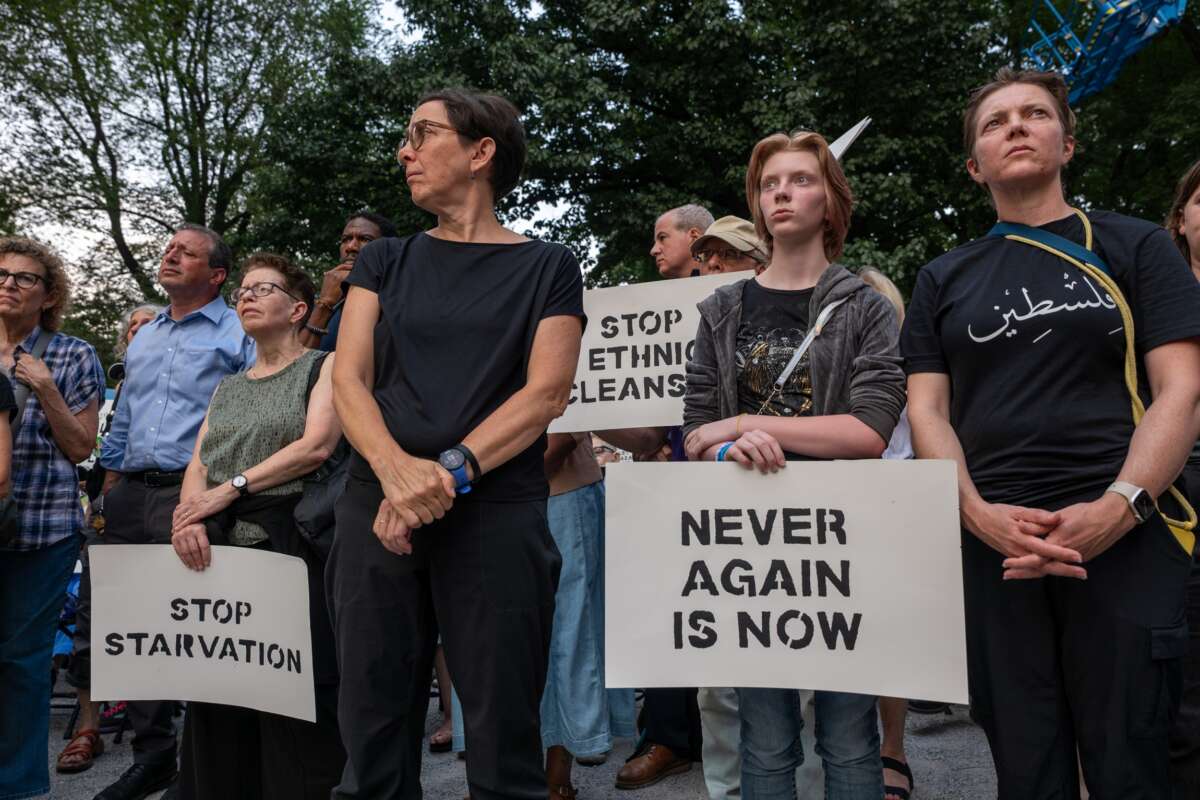
The revised guidelines also address the misuse of antisemitism claims to silence discussion regarding Israel’s actions. The APA states, “The weaponization of antisemitism—manipulative or bad faith invocation of accusations—creates significant adverse consequences for Jews and non-Jews who oppose the state of Israel’s actions and support Palestinian rights.”
This revision follows a broader trend of escalating tensions around free speech on college campuses, where previous administrations have been criticized for labeling pro-Palestinian protests as antisemitic. Notably, during the Trump administration, there were instances where student activists faced detention or deportation threats due to their critiques of Israel.
Barry Trachtenberg, a member of the Jewish Voice for Peace (JVP) Academic Council and the Rubin Presidential Chair of Jewish History at Wake Forest University, praised the APA’s decision as a “principled stand rooted in both scholarship and justice.” He noted that the resolution’s approach helps combat genuine antisemitism while also protecting the voices of Palestinians affected by violence.
In response to the updated guidelines, Jonah Rubin, senior manager of campus organizing for JVP, remarked that the resolution represents a significant victory for academic freedom. He stated, “At a time when so many academic institutions are bowing to authoritarian demands, it is heartening to see the APA reject the weaponization of false charges of antisemitism.”
The APA’s revision comes amid alarming reports about the ongoing humanitarian crisis in Gaza. A study published in The Lancet Global Health estimates that over 75,000 Palestinians were killed during the initial 16 months of conflict beginning October 7, 2023. This figure aligns with previous estimates from Gaza’s Ministry of Health, which have faced skepticism from Israeli authorities.
Further research from the Max Planck Institute for Demographic Research and the Center for Demographic Studies indicates that the death toll may exceed 100,000 as the conflict continues. Researcher Irena Chen, co-lead of the study, stated, “We will never know the exact number of dead…we are only trying to estimate as accurately as possible what a realistic order of magnitude might be.”
The APA’s updated guidelines reflect a growing awareness of the complexities surrounding discussions on Israel and Palestine. As debates continue, the organization’s stance may influence future conversations about antisemitism, free speech, and the rights of Palestinians within academic and public discourse.