
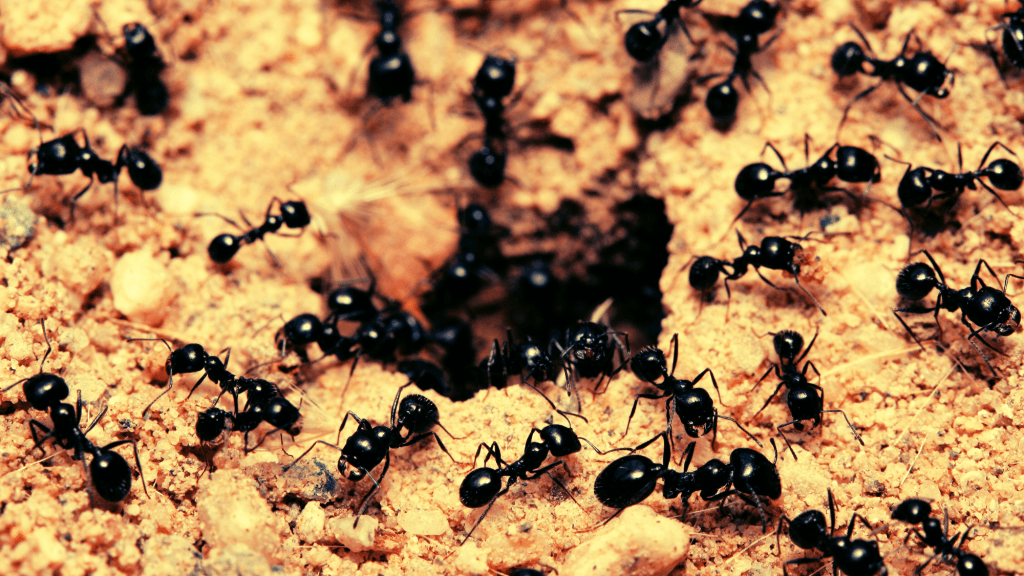
URGENT UPDATE: New research has revealed a shocking behavior among young ants: when sick, they release a chemical signal indicating they are ready to die. This unsettling discovery, published in Nature Communications, was led by a team studying the small black garden ant, Lasius neglectus, known for its densely packed colonies.
The findings, shared by Erika Dawson, a behavioral ecologist at the Institute of Science and Technology Austria, indicate that infected young ants, still sealed inside their cocoons, cannot escape their fate. Instead, they emit signals to older worker ants, essentially begging for removal before they can spread illness within the colony.
Ant colonies, which can host thousands of individuals, are particularly vulnerable to disease outbreaks, as noted by Dawson. “An ant colony is a perfect place for a disease outbreak to occur because there are thousands of ants crawling over each other,” she explained in an interview reported by StudyFinds.
Adult worker ants manage infections by leaving the nest to die alone, a grim but effective strategy. However, young ants lack this ability, leading them to rely on their chemical pleas. Researchers had previously identified that sick pupae emit distinct smells that prompt workers to tear open their cocoons and inject poison to eliminate the pathogens.
The study aimed to determine whether this chemical signal was a byproduct of infection or a deliberate call for intervention. Experiments revealed that when the scent from sick pupae was applied to healthy ants, workers also destroyed the healthy individuals. This indicates that the signaling is an active process, triggered when workers are nearby, suggesting that sick pupae intentionally produce it to elicit a response.
Dawson characterized this behavior as a mix of self-sacrifice and strategy. While the infected pupae lose their lives, their genes continue through healthier siblings. Interestingly, queen pupae do not exhibit this signaling behavior. Further tests revealed that queens possess stronger immune defenses, often recovering from infection without needing to signal for assistance.
This research sheds light on the complex dynamics of ant colonies, where members recognize when their health becomes a threat to the collective. The behavior of young ants calling for death, while grim, serves to protect the colony’s survival, emphasizing the efficiency of their social structure.
This study not only reveals the darker side of ant behavior but also highlights their long-standing evolutionary adaptations. Ants have been perfecting these survival strategies for over 100 million years. As this research gains attention, it prompts deeper questions about the social structures of these remarkable insects and the sacrifices made for the greater good.
Stay tuned for more updates on this fascinating topic as scientists continue to explore the intricate lives of ants.