
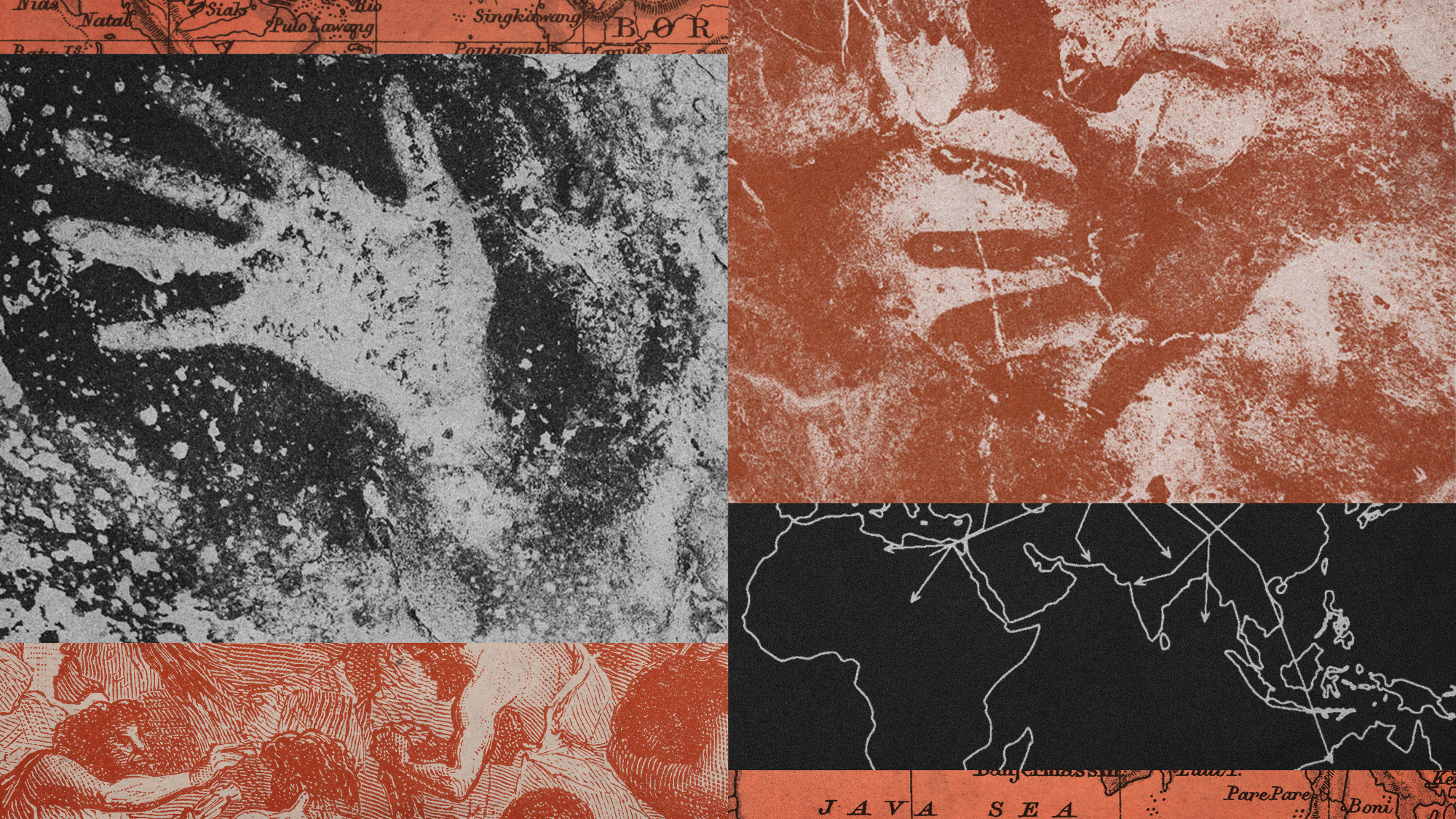
Recent discoveries of rock art in caves across Indonesia have unveiled potential insights into early human migration patterns and artistic expression. These paintings, believed to be over 67,000 years old, may represent the oldest known examples of rock art, highlighting the sophistication of our ancestors.
The art was uncovered on two Indonesian islands, Sulawesi and Borneo, situated in the Wallacea region. According to findings published in the journal Nature, the artwork from Sulawesi is dated to at least 67,800 years ago, which predates previous discoveries in the same area by approximately 15,000 years. This reinforces Indonesia’s reputation as a site for some of the world’s earliest cave drawings, although even older examples have been identified in South Africa.
Researchers believe that these ancient artworks were created by blowing pigment over hands placed against cave walls, resulting in outlines that suggest human presence. Notable features of the art include modifications to some fingertips, giving them a more pointed appearance.
One of the significant implications of this discovery is its potential to shed light on human migration. Most research indicates that early humans left Africa between 60,000 and 90,000 years ago, traversing the Middle East and South Asia before eventually reaching Australia. The rock art found in Indonesia may provide vital clues about this migration journey.
Helen Farr, a maritime archaeologist at the University of Southampton, emphasized the importance of these findings. She stated that they support the notion that early humans possessed seafaring technology, enabling them to navigate open waters between Wallacea and Australia as early as 65,000 years ago. Farr remarked, “It is great to see the art preserved and dated, providing a small window to a wide range of activities that’s often missing in the archaeology of this time depth.”
During the time these artworks were created, sea levels were significantly lower, which would have opened land bridges between certain islands. However, humans still needed to navigate between these landmasses to expand across the region. The newly discovered rock art may offer insights into how these migrations occurred.
The findings also provoke discussions about early human intelligence and creativity. Previously, researchers studying cave art in Europe believed that significant artistic development began there. Adam Brumm, a professor of archaeology at Griffith University and co-author of the study, noted that the new evidence from Indonesia challenges this perspective, indicating that humans were producing “incredibly sophisticated” cave art long before they reached that part of the world.
Moreover, Maxime Aubert, another co-author from Griffith University, suggested that these discoveries likely indicate a more complex and older cultural tradition that has remained largely unrecognized until now.
Nevertheless, caution has been urged by some researchers regarding the interpretation of these findings. Paul Pettitt, a professor of palaeolithic archaeology at the University of Durham, stated that while it is tempting to celebrate the accomplishments of Homo sapiens, it is also essential to consider other human-like species that existed in the region at that time. He advised against forming overarching narratives about the complexity and success of our species without acknowledging the roles these other entities may have played.
As research continues, the implications of this remarkable rock art will likely deepen our understanding of early human societies and their migratory behaviors, while also prompting a reevaluation of the development of artistic culture across different regions. The Indonesian rock art not only underlines the sophistication of ancient human life but also signifies a crucial chapter in the story of human migration.