
A recent national poll conducted by AP-NORC reveals significant unease among American adults regarding the threat posed by Iran. Despite their concerns, a majority express skepticism about President Donald Trump‘s ability to handle foreign affairs effectively. This poll comes as critical nuclear negotiations take place between the Trump administration and Iranian officials, potentially marking a pivotal moment in U.S.-Iran relations.
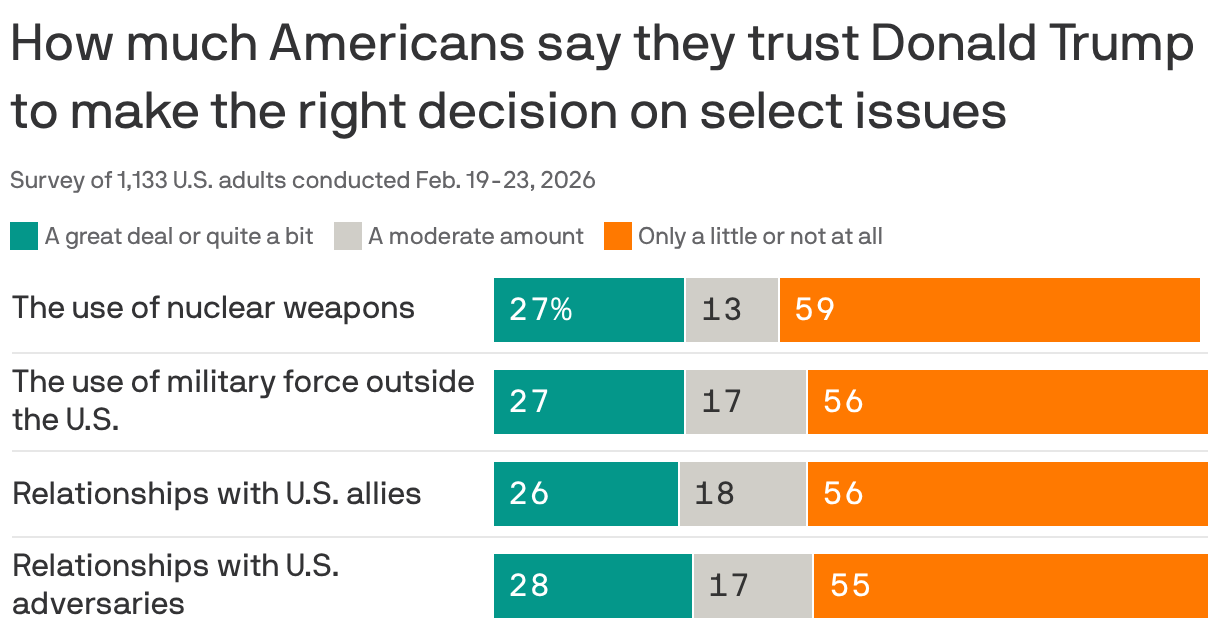
According to the poll conducted from February 19-23, 2024, approximately 80% of U.S. adults indicate at least a moderate level of concern regarding Iran’s nuclear ambitions. Of these respondents, nearly 48% report being very or extremely concerned about the implications for national security. The findings suggest that while many Americans recognize the gravity of the situation, there is widespread distrust of the president’s decision-making on issues of international military action.
In terms of trust, 56% of those surveyed do not believe Trump will make the right choices concerning military interventions abroad. This skepticism cuts across party lines, with 16% of Republicans expressing little to no confidence in the president’s military judgments. Among Democrats, 92% and 65% of independents share similar reservations about Trump’s capacity to handle nuclear issues responsibly.
The backdrop to these findings includes Trump’s history of military interventions since resuming the presidency. Notably, he has ordered strikes aimed at Iranian nuclear facilities and a significant operation that resulted in the capture of Venezuelan President Nicolás Maduro. The increasing military presence in the Middle East, coordinated by the Pentagon, underscores the escalating tensions with Tehran, with many viewing this as a critical juncture for U.S. foreign policy.
During his recent State of the Union address, Trump emphasized his preference for a diplomatic resolution to the ongoing crisis with Iran while simultaneously outlining a case for potential military action. “My preference is to solve this problem through diplomacy,” he stated. “But one thing is certain, I will never allow the number one state sponsor of terrorism to have a nuclear weapon. And no nation should ever doubt America’s resolve.”
As diplomatic talks continue, Steve Witkoff and Jared Kushner, senior envoys for Trump, held a third round of negotiations with Iranian Foreign Minister Abbas Araghchi on Thursday. The outcome of these discussions may have far-reaching implications for both international relations and national security.
The poll’s methodology involved a sample of 1,133 adults across the United States, with a margin of error of ±4 percentage points. As the situation develops, the American public’s sentiment towards Iran and their president’s foreign policy decisions will likely play a crucial role in shaping future diplomatic interactions and military strategies.