
As Alaska’s legislative session approaches, lawmakers are grappling with limited revenue projections and their relationship with outgoing Governor Mike Dunleavy. With the governor entering his final year in office, legislators are expressing mixed expectations about the potential for significant reforms in the coming session.
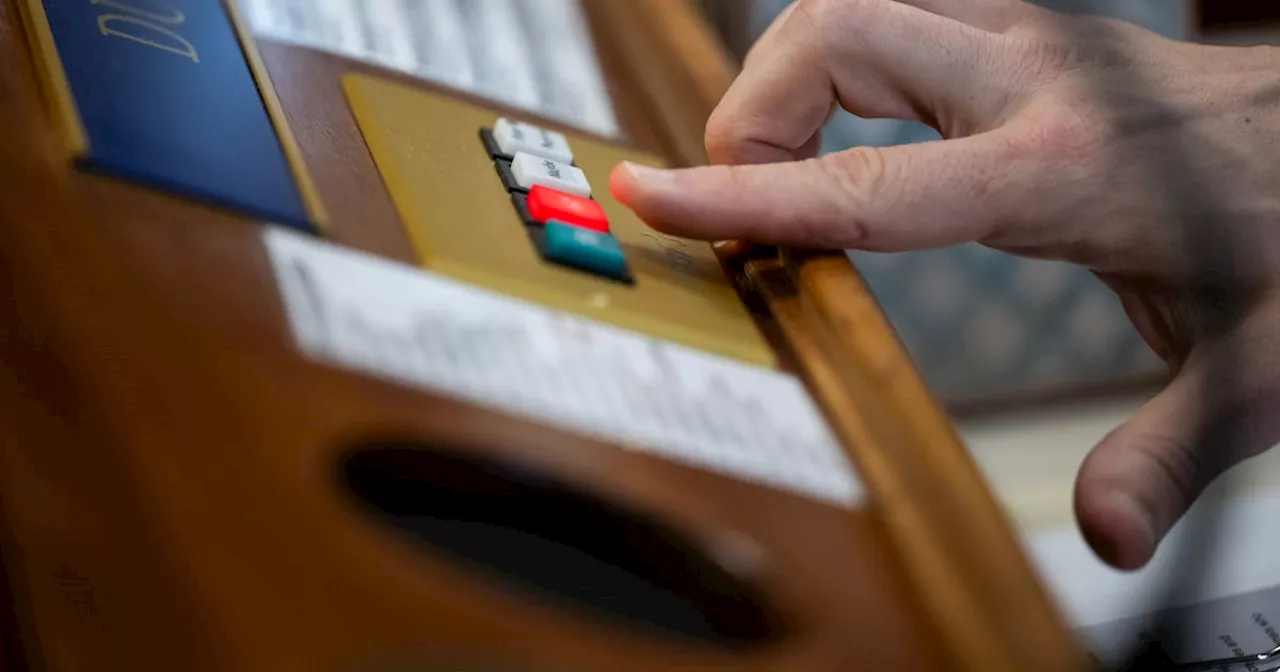
Senator Forrest Dunbar, a Democrat from Anchorage, highlighted the challenges during a recent Senate floor session at the Alaska State Capitol in Juneau. Lawmakers are concerned that the constrained revenue environment, coupled with Dunleavy’s perceived lack of political engagement, will hinder their ability to enact meaningful legislation. “I think we’re just doing the best we can to stop bad things from happening,” said Representative Andrew Gray, an Anchorage Democrat. He emphasized that the chances of passing substantial policies are “extraordinarily slim.”
The state’s financial landscape has been particularly strained due to low oil prices, which have left legislators questioning the feasibility of major changes in the budget. In previous sessions, leaders expressed their intent to significantly increase education funding, a goal they achieved by overriding Dunleavy’s vetoes. This shift indicates a growing impatience among lawmakers, who are now more determined to pursue their objectives without waiting for the governor’s approval.
Cathy Giessel, the Senate Majority Leader, articulated the frustration many legislators feel regarding the gridlock that occurs once bills reach the governor’s desk. “In our Legislature, that isn’t true,” she stated, referring to the notion that the legislative bodies themselves create the deadlock. The barriers, she contends, arise from the governor’s vetoes.
Dunleavy’s office, through spokesperson Jeff Turner, defended the administration’s communication efforts with lawmakers, asserting that the governor has consistently engaged with legislators throughout his tenure. “The Governor has also worked with many legislators on passing a number of bills,” Turner noted in an email.
As legislators prepare for the upcoming session, the focus remains on how to address the critical revenue shortfall. Both the governor and lawmakers acknowledge the necessity for increased revenue to meet state obligations. Yet the debate continues over the sources of that revenue, creating further complications in finding common ground.
Representative Justin Ruffridge, a Republican from Soldotna, expressed optimism about the potential for legislative accomplishments in Dunleavy’s final year. He believes it is essential for lawmakers to engage in discussions about the governor’s proposed fiscal plan, which is yet to be detailed. “If we don’t talk about it every single year until we finally get something that we can all agree on, I think that would be a mistake,” he remarked.
Giessel has also emphasized the urgency of advancing legislation that could enhance the state’s revenue streams. Dunleavy’s recent budget proposal suggests spending approximately $1.8 billion from the state’s $3 billion savings account, placing additional pressure on legislators to secure sustainable revenue solutions.
One significant point of contention is the application of Alaska’s corporate income tax to privately held corporations, such as Hilcorp, which has historically been exempt due to its corporate structure. Giessel labeled this a “no-brainer,” noting that taxing such entities could generate tens of millions for the state. However, questions remain regarding whether there is sufficient support among lawmakers to advance this bill, particularly in light of potential vetoes from the governor.
As the session begins, legislators will also need to decide whether to convene a joint session to override Dunleavy’s veto of a bill aimed at imposing the corporate income tax on online businesses. This decision carries significant implications for the state’s fiscal future, as the legislature must gather the necessary votes to countermand the governor’s veto.
Giessel articulated the critical nature of the current fiscal situation, stating, “We don’t have the room anymore to say, ‘Well, we can limp through another year.’ That time is gone.” As legislators gather in Juneau, the outcome of their discussions will play a pivotal role in shaping Alaska’s financial landscape for the coming year.