
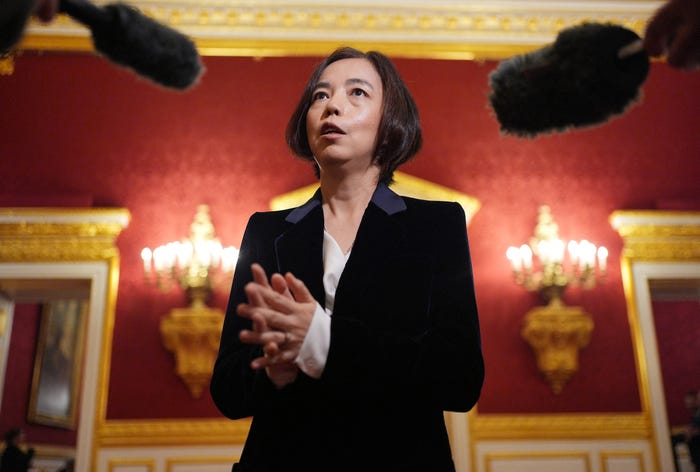
URGENT UPDATE: Fei-Fei Li, renowned as the “Godmother of AI,” has delivered a striking critique of the current messaging surrounding artificial intelligence. Speaking at Stanford University earlier today, Li expressed her disappointment, stating that the discourse has devolved into extreme narratives—either portraying AI as a harbinger of doom or an unrealistic utopia.
Li emphasized that such hyperbolic rhetoric misleads the public, especially those outside the tech industry, and called for a more factual and balanced conversation about AI’s implications. “The world’s population, especially those who are not in Silicon Valley, need to hear the facts,” she stated, highlighting the urgent need for public education on this crucial topic.
During her talk, Li remarked, “I like to say I’m the most boring speaker in AI these days because precisely my disappointment is the hyperbole on both sides.” She criticized the “total extinction, doomsday” claims alongside the overly optimistic visions of “post-scarcity” and “infinite productivity.” Such extremes, she warned, fill the tech discourse and create confusion among the general populace.
Li is not alone in her concerns. Prominent AI leaders, including Andrew Ng and Yann LeCun, have echoed calls for moderation in AI discussions. Recently, Ng described artificial general intelligence (AGI) as “overhyped,” suggesting that there will be many tasks that humans can perform that AI will not be able to replicate for a long time. “AGI has been overhyped,” Ng asserted during a recent talk at Y Combinator.
LeCun, former chief AI scientist at Meta, also weighed in, describing large language models as “astonishing” yet limited in their capabilities. “I hate the term AGI,” he said, emphasizing that these models are not a pathway to human-level intelligence.
Li, a Stanford computer science professor known for her groundbreaking work on ImageNet and co-founder of World Labs, insists that the current discourse does not adequately inform the public about the realities of AI technology. “That kind of discourse, that kind of communication, that kind of public education is not as good as I hope it is,” she lamented.
This urgent call for balanced AI messaging comes at a pivotal moment as society grapples with the growing influence of artificial intelligence. The implications of AI development are far-reaching, impacting industries, economies, and daily lives globally.
As these discussions unfold, the tech community is watching closely for how leaders respond to this clarion call for clarity and responsibility in AI messaging. The trajectory of AI’s future depends on informed dialogue that bridges the gap between technological advancement and public understanding.
Stay tuned for further updates as this critical conversation develops.