
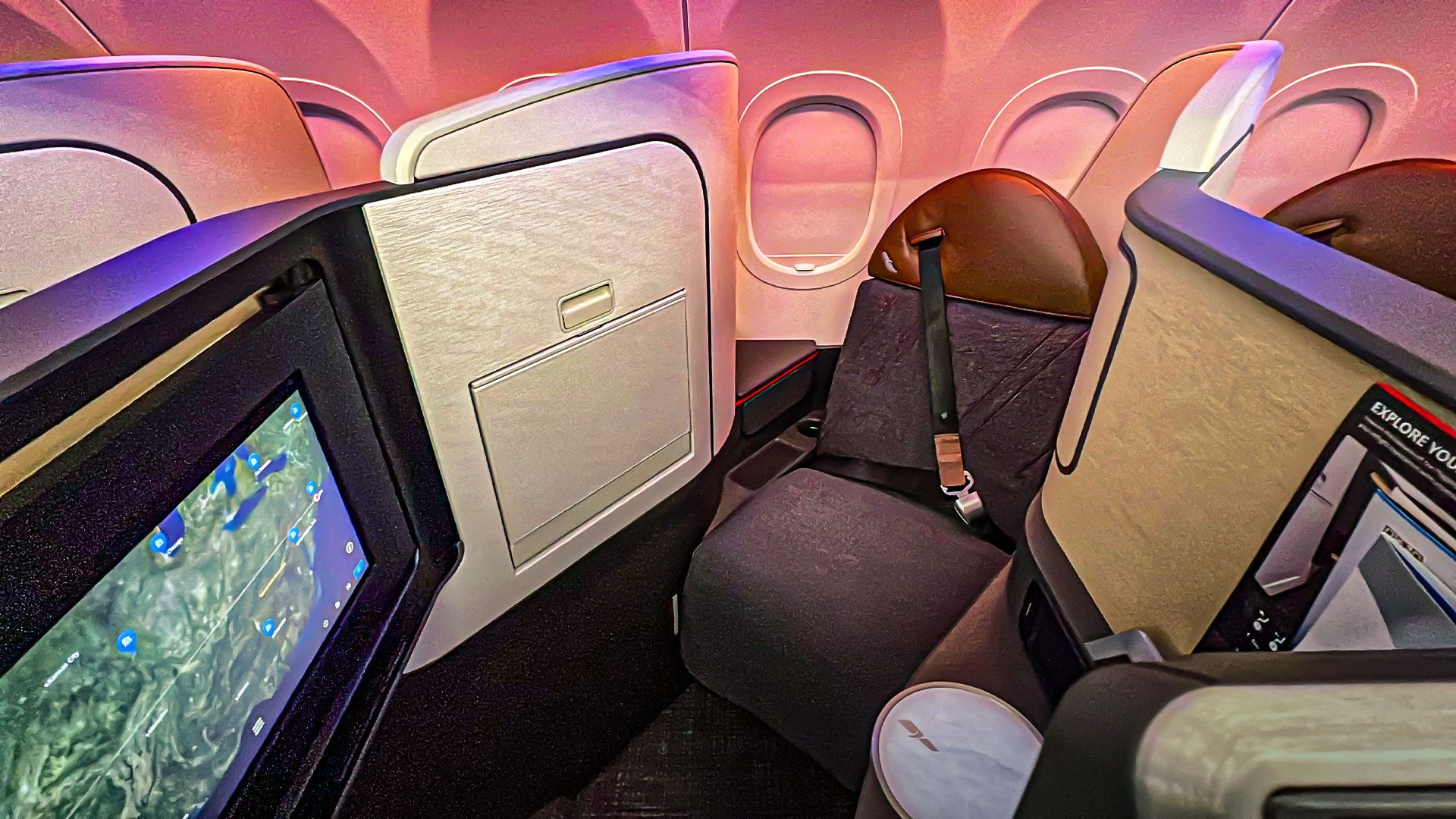
In a significant shift within the airline industry, several carriers are now equipping their narrowbody aircraft with lie-flat business class seats, traditionally reserved for larger planes. This transition represents a growing trend aimed at enhancing passenger comfort on shorter routes, particularly in markets where demand for premium travel is rising. As airlines increasingly recognize the value of providing high-quality seating options, the landscape of narrowbody business class is evolving.
Innovative Seating Solutions on Narrowbody Aircraft
Historically, premium seating on aircraft was characterized by larger seats with added legroom and improved dining options. Over time, airlines have segmented their premium offerings, leading to distinct first and business class cabins. While some airlines still maintain an international first class, business class is now often perceived as equally luxurious but at a lower price point. This evolution is particularly evident on widebody aircraft.
Despite this trend, narrowbody aircraft—typically used for shorter flights—have been slower to adopt similar enhancements. European airlines, in particular, have been known for their short-haul business class offerings, which often consist of standard economy seats with a blocked middle seat. However, the recent introduction of lie-flat seats on these aircraft marks a notable change in the industry.
The concept of lie-flat seating on narrowbody aircraft first gained traction with the Boeing 757-200. Continental Airlines was a pioneer, introducing lie-flat seats on its 757-200s in 2010. These aircraft are now part of the United Airlines fleet and continue to showcase the innovative Collins Aerospace Diamond seats. Other US carriers, such as Delta Air Lines and American Airlines, have also embraced this trend, outfitting their narrowbody fleets with similar premium seating.
Current Offerings in the Americas and Beyond
Among US airlines, Delta operates 12 Boeing 757-200s featuring the Collins Diamond seats for its DeltaOne service. American Airlines has equipped 15 Airbus A321-200s with these same seats for its Flagship Business service. Looking to the future, American Airlines is set to receive new Airbus A321XLR aircraft, which will feature the Collins Aurora in its Flagship Suites, further enhancing its premium offerings.
JetBlue also participates in this trend, operating a subfleet of Airbus A321-200s equipped with the Thompson Vantage seats for its Mint service. These configurations demonstrate how US airlines are competing to provide a premium experience on narrowbody aircraft.
Outside of the United States, Copa Airlines stands out as the only carrier in the Americas to offer lie-flat seating on a narrowbody, utilizing the Collins Diamond for its Dreams Business Class on the Boeing 737 MAX 9.
European airlines tend to provide lie-flat seating primarily on transatlantic routes. La Compagnie, for instance, has established a niche with its all-business class flights between Europe and Newark, initially employing Boeing 757-200s before transitioning to the Airbus A321neo in 2019, outfitted with 76 Collins Aerospace Diamond seats. Other European carriers such as ITA Airways and TAP Air Portugal have also begun incorporating premium seating on select narrowbody flights.
In the Middle East, Qatar Airways and Etihad Airways exemplify the trend toward lie-flat seating in narrowbody aircraft. Qatar operates Airbus A320-200s with recliner seats alongside another subfleet featuring the Collins Diamond, while Etihad is integrating the Stelia Opera into its new Airbus A321LRs.
Airlines in South Asia are not lagging behind either. Air India, for example, operates a fleet of Airbus A321neos equipped with the Collins Diamond, previously flown by Vistara, showcasing the increasing availability of lie-flat options in this region.
As airlines continue to enhance their narrowbody offerings, the competitive landscape for premium travel is set to evolve further. With the demand for comfort and luxury rising, passengers can expect to see more airlines adopting lie-flat seating and other innovative products in their business class cabins. This shift not only reflects changing consumer preferences but also marks a new standard in the airline industry as it adapts to meet the needs of modern travelers.