
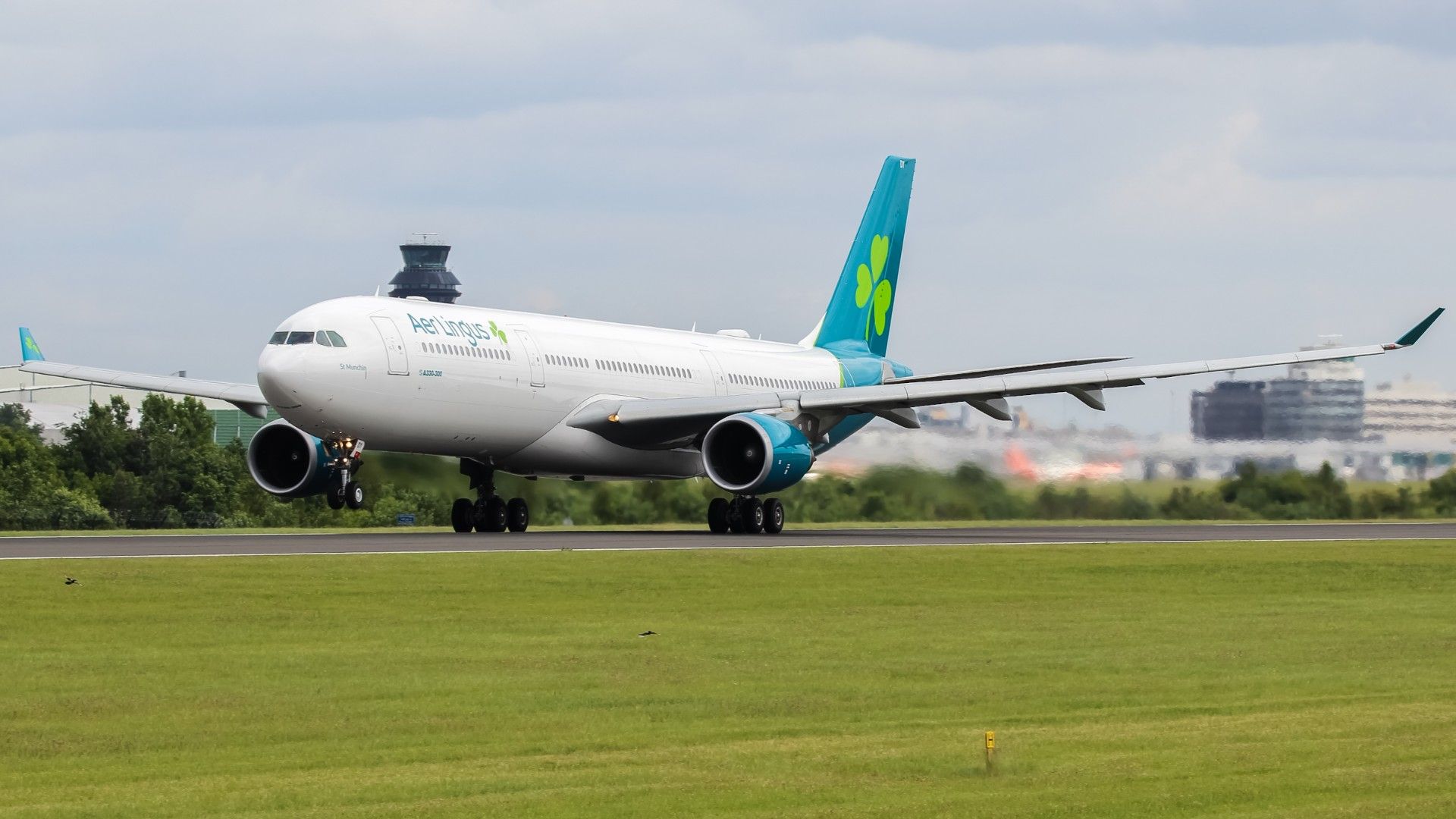
Aer Lingus has announced its passenger traffic numbers for the United States, revealing that the airline transported 2.8 million passengers between December 2024 and November 2025. This figure marks a significant increase of 7% compared to the previous year, outpacing the overall growth of the Europe-US market by nearly seven times. New routes to Indianapolis and Nashville have contributed to this growth. Data from the US Department of Transportation highlights Aer Lingus’ role in transatlantic travel, although it remains a minor player in the market, ranking as the ninth-largest operator.
Despite the encouraging year-over-year growth, Aer Lingus faces challenges. The airline holds only a 3.6% share of the transatlantic market, with just one in every 28 passengers flying between the US and Europe choosing Aer Lingus. In the past year, the airline operated 22 routes to the US, including 18 from Dublin, two from Shannon, and two from Manchester. However, the airline has announced the upcoming closure of its Manchester base along with its Manchester-Barbados service.
Load Factors Show Room for Improvement
In examining Aer Lingus’ performance, the average seat load factor for its US routes fell to 76.7%, below the industry average of 83.0%. The load factor dropped by 1.3 percentage points year-over-year, indicating that the increase in traffic did not keep pace with the additional capacity. The geopolitical situation may have also influenced passenger numbers. Notably, the airline’s Manchester routes achieved the highest load factor at 80.0%, followed by Shannon at 78.6% and Dublin at 76.2%.
Among the routes with the lowest load factors was the new service from Dublin to Denver, which recorded just 63.9%. This route, which operates seasonally, has faced challenges since its launch in May 2024. Initially, the maximum number of weekly departures was four, which increased to six in 2025. Although the number of seats available rose by 93.7%, traffic only increased by 65.9%. As a result, Aer Lingus plans to scale back to five weekly flights for 2026, a decision aimed at stabilizing the route’s performance.
Passenger Trends and Connecting Flights
Booking data reveals that approximately 47% of Aer Lingus’ Denver passengers connected to other flights in Dublin. The most popular connecting destinations included Paris Charles de Gaulle, London Heathrow, and Amsterdam. The absence of a codeshare agreement with United Airlines has hindered Aer Lingus’ ability to enhance its traffic generation on this route. Despite this, nearly 11% of passengers on the Denver service began or ended their journey in Dublin.
In summary, while Aer Lingus has shown healthy growth in passenger numbers on its US routes, the airline must address load factors and capacity management to continue improving its performance. The upcoming adjustments, including the reduction of flights to Denver, reflect a strategic response to market demands and operational realities.