
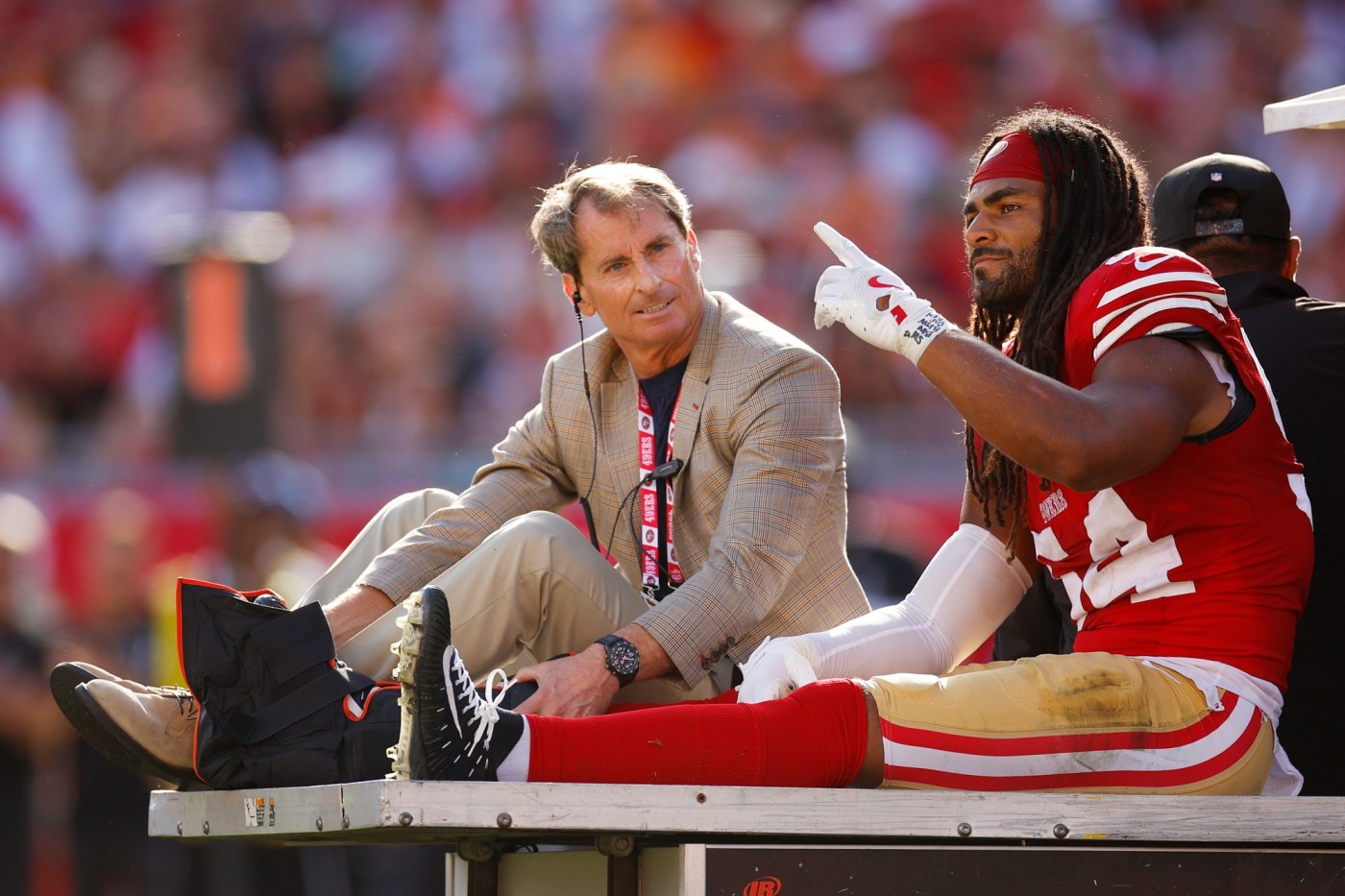
The San Francisco 49ers have tackled a growing theory regarding the influence of a nearby power plant on player injuries during a recent season-ending press conference. Both general manager John Lynch and head coach Kyle Shanahan addressed concerns that the electromagnetic waves emitted from the substation could be a factor in the team’s extensive use of the injured reserve list.
During the press conference held on March 15, 2024, Lynch acknowledged the speculation surrounding the power plant but expressed skepticism about its validity. “Our guys have been reaching out to anyone and everyone to see if a study exists other than a guy sticking an apparatus underneath the fence and coming up with a number that I have no idea what that means,” Lynch stated. He emphasized that the team has heard such claims debunked and noted that the 49ers have experienced significant success at their facility since it opened.
This season, injuries sidelined several key players, including Nick Bosa (torn ACL), Fred Warner (fractured and dislocated ankle), and George Kittle (hamstring and Achilles issues). Such high-profile injuries have spurred questions about the team’s luck rather than attributing them to external factors like electromagnetic waves. Lynch remarked, “I think this year, probably because of the star players that went down, there was a lot of attention given to that.”
While the injuries have raised eyebrows, many players, including running back Christian McCaffrey, continued to perform at high levels despite the alleged risks. McCaffrey recorded over 400 rushes and receptions this season, becoming a key asset for the team. Furthermore, players such as tackle Trent Williams, who sustained a hamstring injury in the season’s final weeks, were able to return quickly.
Interestingly, the discussion around the power plant has gained traction on social media, with former players like Taybor Pepper and Jon Feliciano contributing to the conversation, suggesting it was a topic of locker room chatter. Despite this viral attention, the notion that free agents might be deterred from joining the 49ers due to fears of injury seems unfounded.
The 49ers relocated to Santa Clara in 1988 and opened Levi’s Stadium in 2014. The facility has hosted numerous significant events, including Super Bowl 50. Even with the power plant in close proximity, the NFL’s continued selection of Levi’s for major events indicates confidence in the venue.
In evaluating the impact of the power plant theory, it is essential to consider historical context. Following the devastating Loma Prieta earthquake in 1989, concerns were raised about the safety of professional sports in the Bay Area. Yet, this did not deter athletes like Barry Bonds from joining the San Francisco Giants, nor did it affect Stephen Curry‘s decision to play for the Golden State Warriors.
Ultimately, players typically sign with teams based on financial incentives and opportunities rather than concerns over environmental factors. Free agents are motivated by contracts and the chance to compete at a high level. The reality is that in states like California, high taxes could be more of a consideration than the presence of a power plant.
As the 49ers prepare for the upcoming offseason, the focus will likely shift back to building a competitive roster, with the power plant theory fading into the background. Nonetheless, Lynch humorously suggested he may bring tinfoil to the NFL Draft at Levi’s Stadium, adding a light-hearted touch to an otherwise serious discussion.