
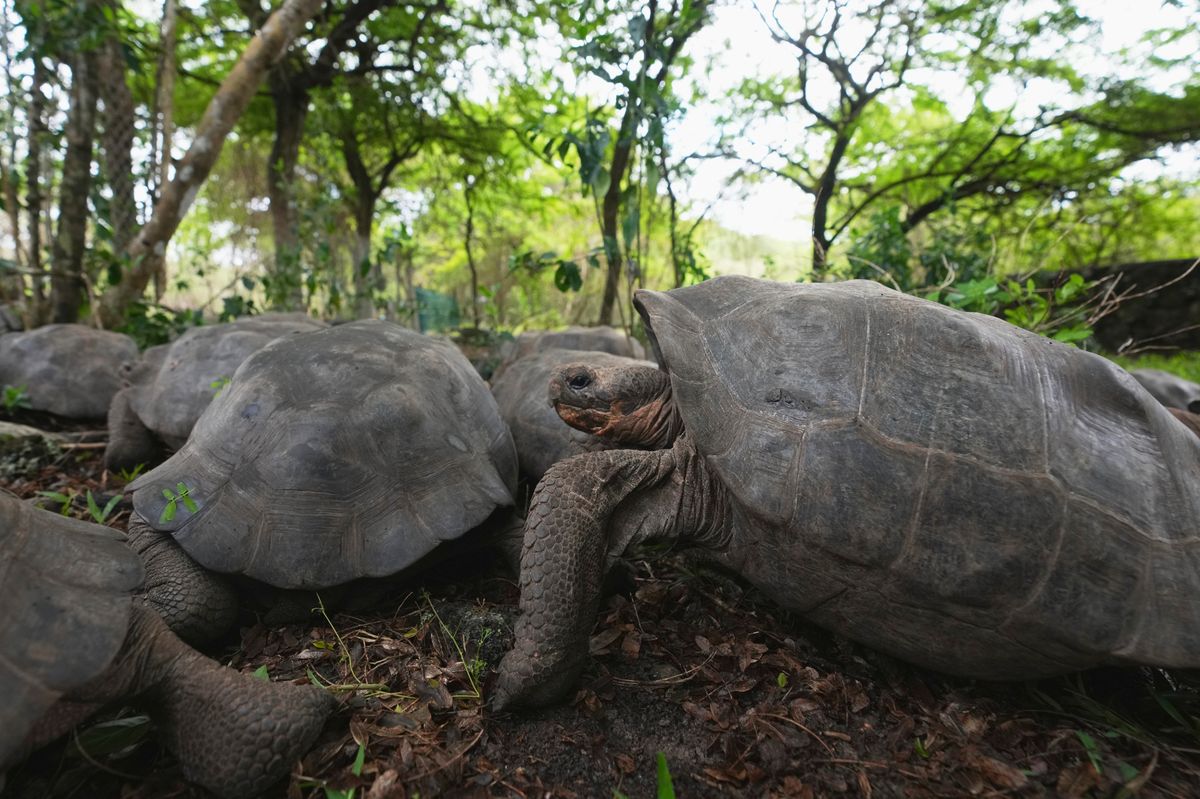
Conservationists have successfully released 158 juvenile giant tortoises on Floreana Island, part of Ecuador’s Galápagos archipelago, marking a significant step in efforts to restore the island’s ecosystem. This release, which took place on Friday, comes nearly 150 years after the last giant tortoises were removed from the island. The tortoises, aged between 8 and 13 years, have begun to explore their new habitat just as the winter rains arrive.
According to Fredy Villalba, director of the Galápagos National Park breeding center on Santa Cruz Island, these tortoises are robust enough to fend off threats from non-native species such as rats and cats. The selection process focused on the best specimens with strong genetic lineages, specifically chosen for their introduction to Floreana. A total of 700 tortoises are planned to be released gradually, emphasizing a careful approach to ecosystem restoration.
Christian Sevilla, director of ecosystems for the Galápagos National Park, explained that the newly released tortoises carry between 40% and 80% of the genetic makeup of the Chelonoidis niger, a species that has been extinct from Floreana for 150 years. The hybrids trace their lineage back to Wolf Volcano on Isabela Island, raising ongoing questions among scientists about the genetic history of these tortoises.
Restoring a Lost Ecosystem
Floreana Island once supported a population of around 20,000 giant tortoises before human intervention led to their extinction. Factors such as whaling, a devastating fire, and relentless exploitation contributed to their disappearance. Biologist Washington Tapia, director of Biodiversa-Consultores, emphasized the importance of reintroducing tortoises with a significant genetic component of the original species. He stated that this effort transcends mere numbers; it aims to restore a valuable lineage.
The reintroduced tortoises will coexist with a small human population of nearly 200 residents, as well as a variety of wildlife including flamingos, iguanas, and sea gulls. Yet, they face challenges from introduced plant species like blackberry and guava, as well as non-native animals such as rats, cats, pigs, and donkeys. These invasive species pose substantial risks to the survival of the tortoises and the broader ecosystem.
Floreana spans approximately 67 square miles and is the southernmost island in the Galápagos archipelago, located about 621 miles from the Ecuadorian mainland. The island’s unique ecological significance was recognized when the U.N. designated the Galápagos Islands as a Natural World Heritage Site in 1978, highlighting their unparalleled diversity of terrestrial and marine species.
This conservation initiative is part of a broader commitment to restore the Galápagos ecosystem and ensure the survival of its unique species. The efforts to reintroduce giant tortoises represent a hopeful step toward ecological balance, with the potential to reshape the island’s environment for future generations.